Classroom mode
A question for the whole room
One story to open. A room full of ideas to test.
Ready in three steps
- Open the story.Read and try the first pages together.
- Pause for a prediction.At the story’s question, read its choices aloud. Invite a vote and ask, “What makes you think that?”
- Run it. Watch. Wonder.Choose the class’s prediction, run the experiment, and compare what happened with your guesses.
Different guesses are welcome. The experiment gives everyone something to rethink.
Something to put on paper
A one-page prediction and observation sheet. No answers included.
After the experiment: discussion notes
Talk about what happened
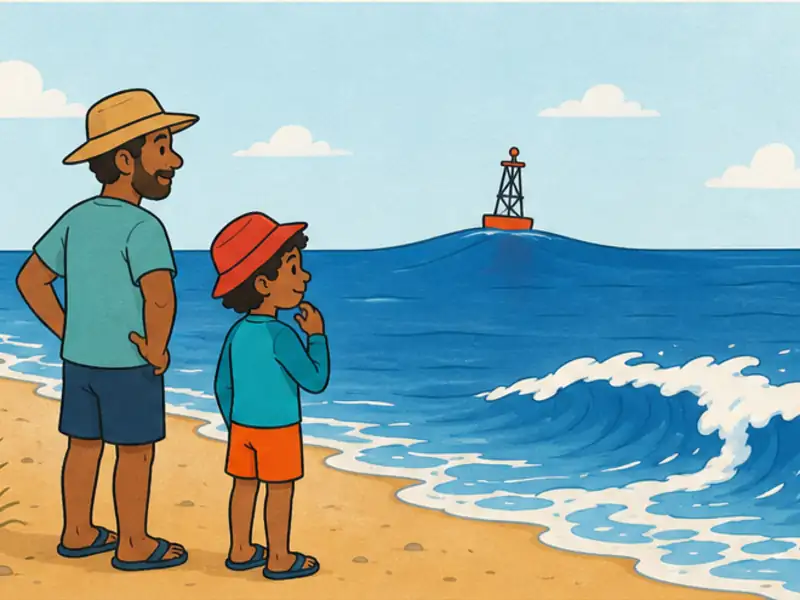
- Predict first: a wave rolls in calmly out deep, then crashes at the shore. Do you think the wind changed, or something under the water?
- Predict first: if the beach drops off steeply versus slopes gently, which one makes the wave tip over harder? Why?
- The water in a wave mostly circles in place. So predict — how does the foam still end up sliding all the way up the sand?
Where it shows up in real life
- Waves curling and crashing into white foam at the beach
- Surfers riding the long, rolling break of a gently sloped reef or beach
- A boat far out at sea bobbing up and down on a swell that never crashes
Free · no login · no student accounts