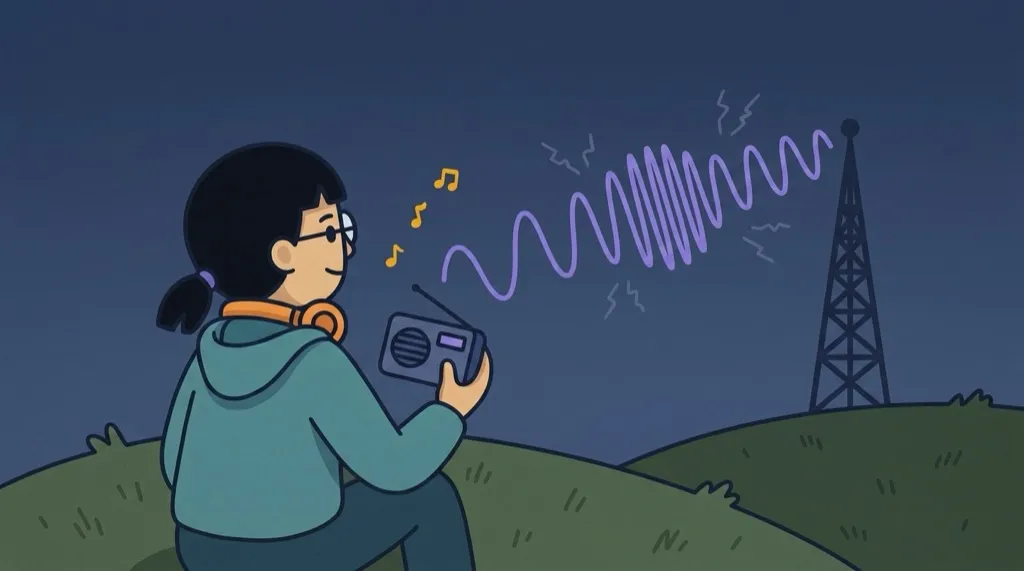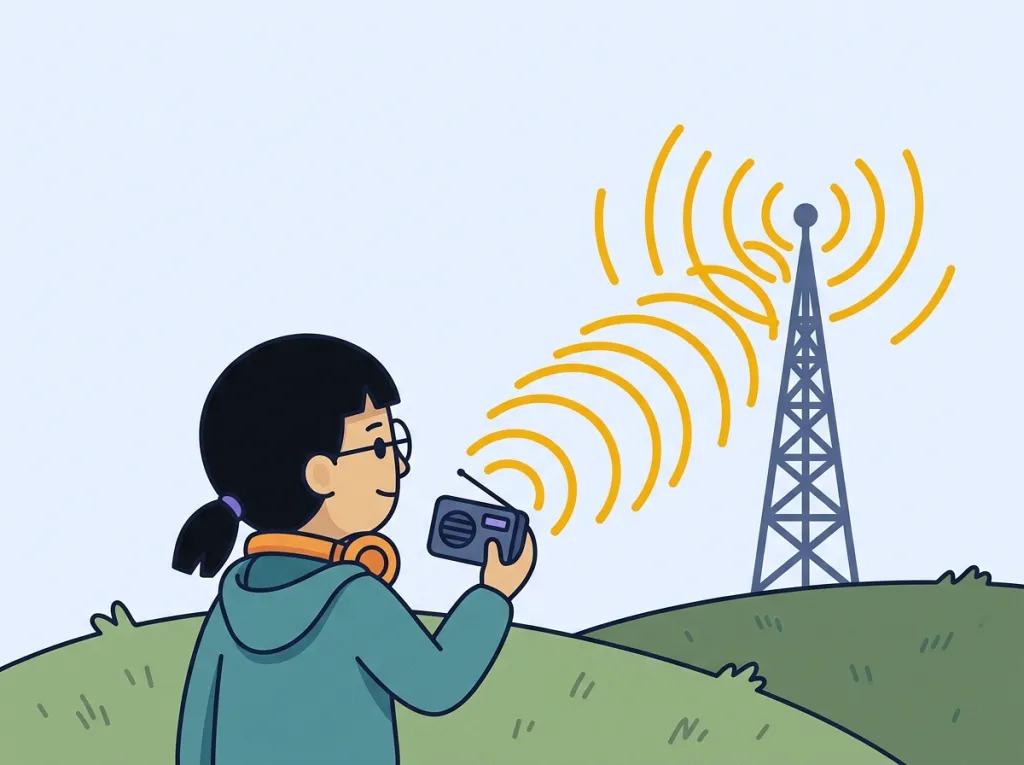
First dial a wave has: how TALL it is. A tall wave is a loud, strong signal; a flat little wave is a tiny whisper. Tap it.
tap the wave
Second dial: how SQUISHED the wiggles are. Squished-up wiggles = fast; spread out and roomy = slow. Tap and watch the spacing move.
tap the wave
To send a song, a radio bends just one dial in time with the music. AM bends the HEIGHT up and down. FM squishes the SPACING tighter and looser.
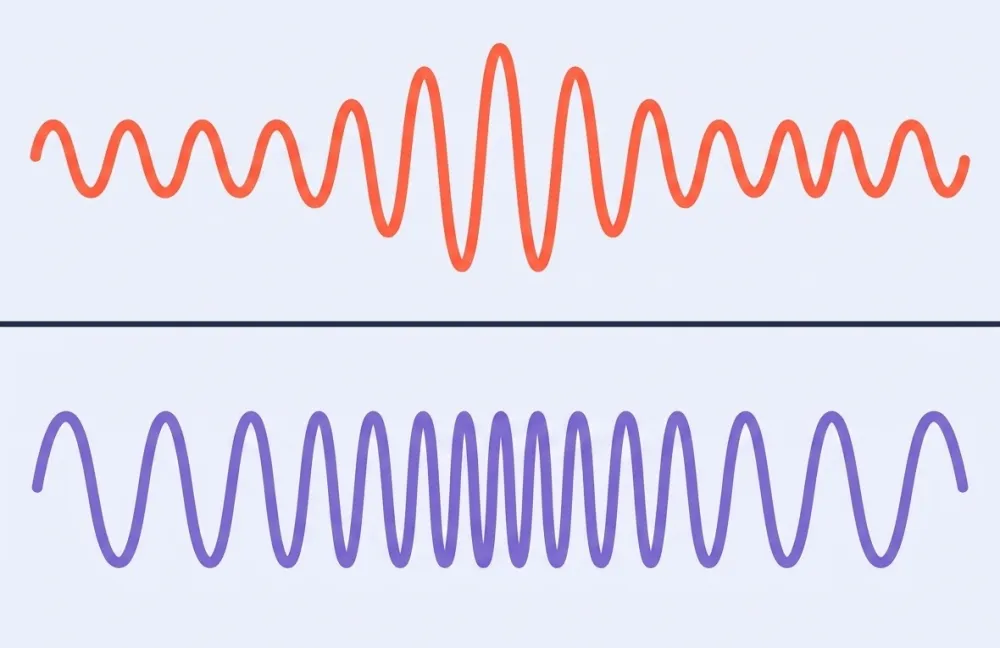
Your turn — be the station. Make a sound, and watch AM bend the height while FM bends the spacing.
the sound
AM radio
FM radio
the sound: singing
quietloud
Now a thunderstorm rolls in 🌩️
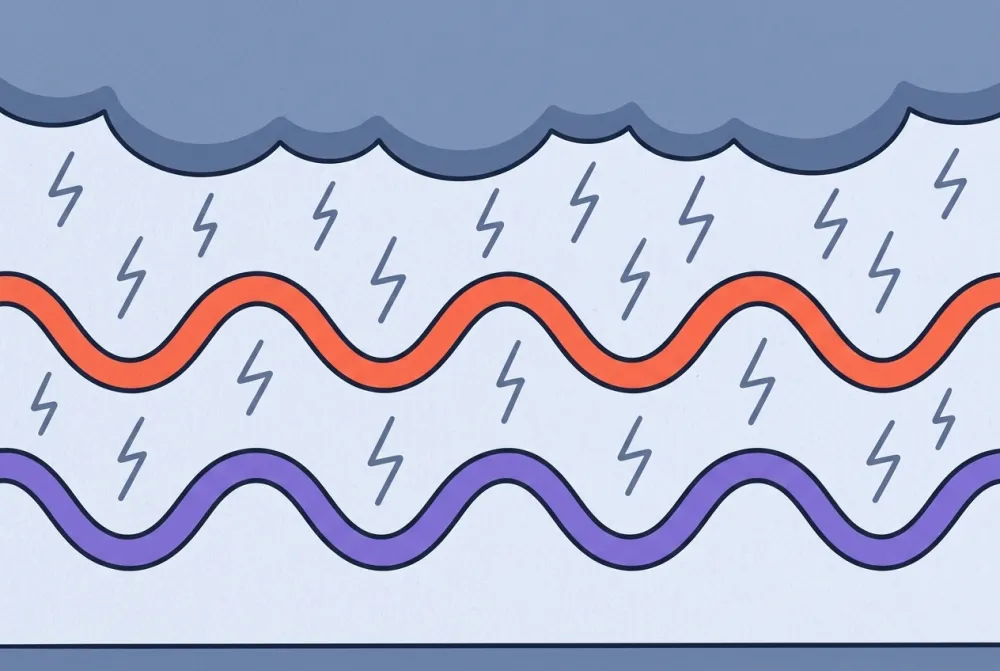
It shakes the HEIGHT of every wave it touches. One radio hides its song in the height, the other in the spacing… which one survives? 🤔
You just saw: the storm shakes the height.
So whose music still sounds good — AM (hides it in the height) or FM (hides it in the spacing)?
Drag the storm up and watch both radios 🌩️
storm: calm
calmbig storm