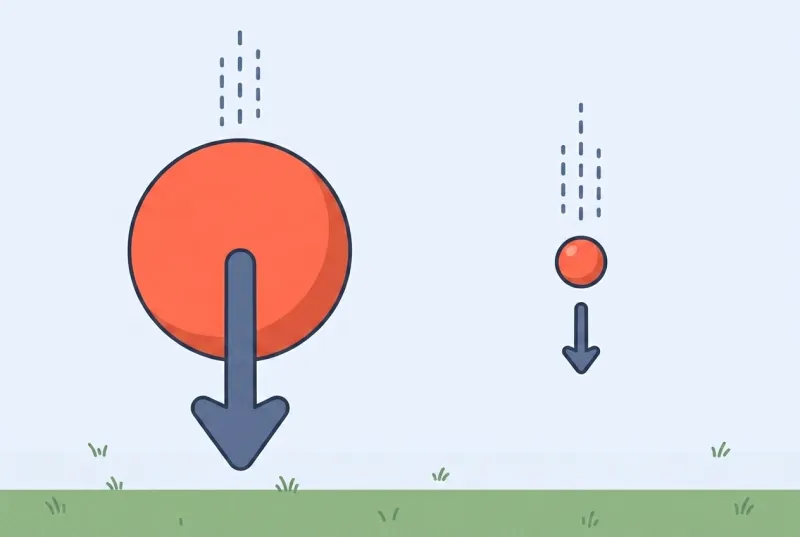
First: gravity. It grabs every falling thing and won't let go — the longer it falls, the faster it goes. Tap to drop a rock.
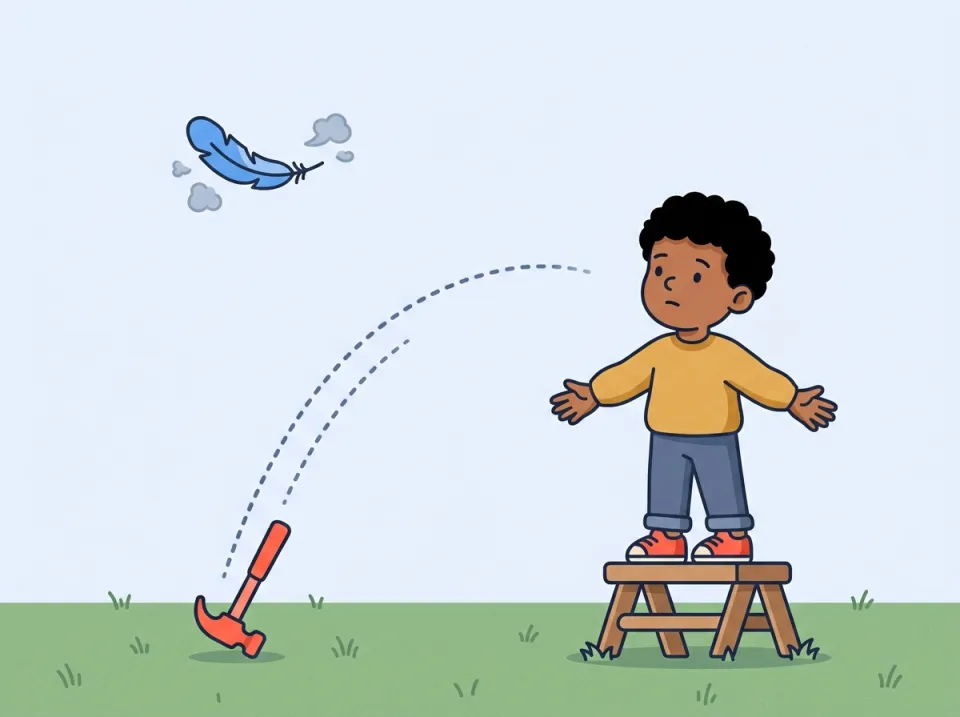
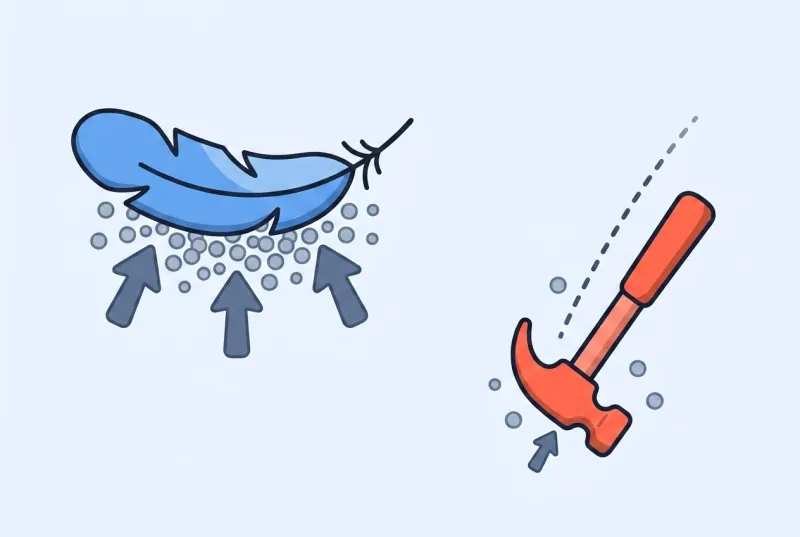
Second: air. A falling thing has to shove the air out of its way — and the air shoves back. The feather's big fluffy shape catches LOTS of air. The hammer slices right through.
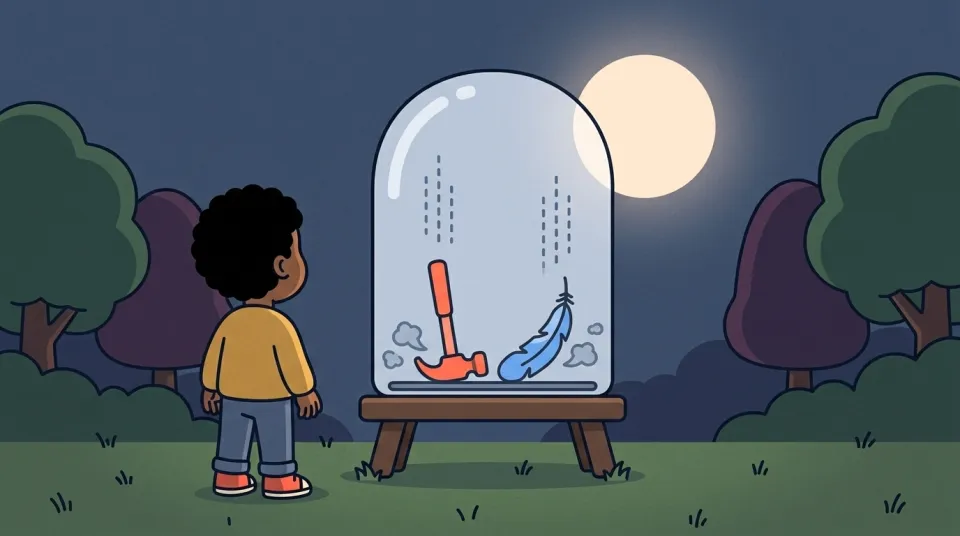
Now swap the hammer for a round ball. Race the ball and feather in a sealed tube. Slide the air away, tap drop, and watch who lands first.
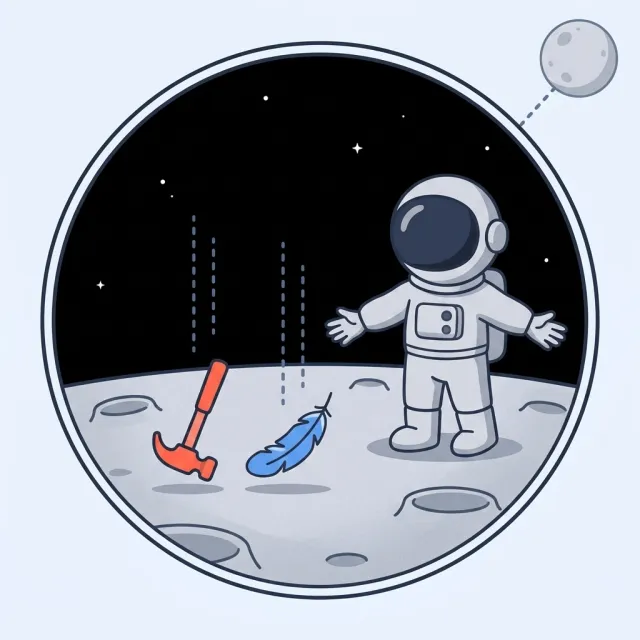
Try it with the air pumped all the way out.
Now the air is gone for good.
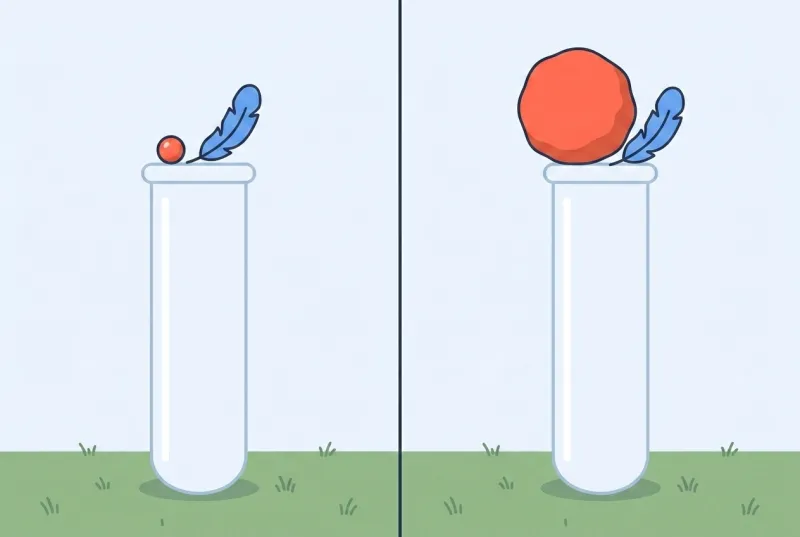
One dial left: how heavy the ball is. A tiny marble… or a giant boulder. Surely a super-heavy boulder finally beats the feather… 🤔
You just saw: no air, nothing holding the feather back.
Now drop a giant boulder next to the feather — does all that extra weight finally beat it?
Slide the ball up to giant boulder ⬇
slide the ball up to giant boulder first