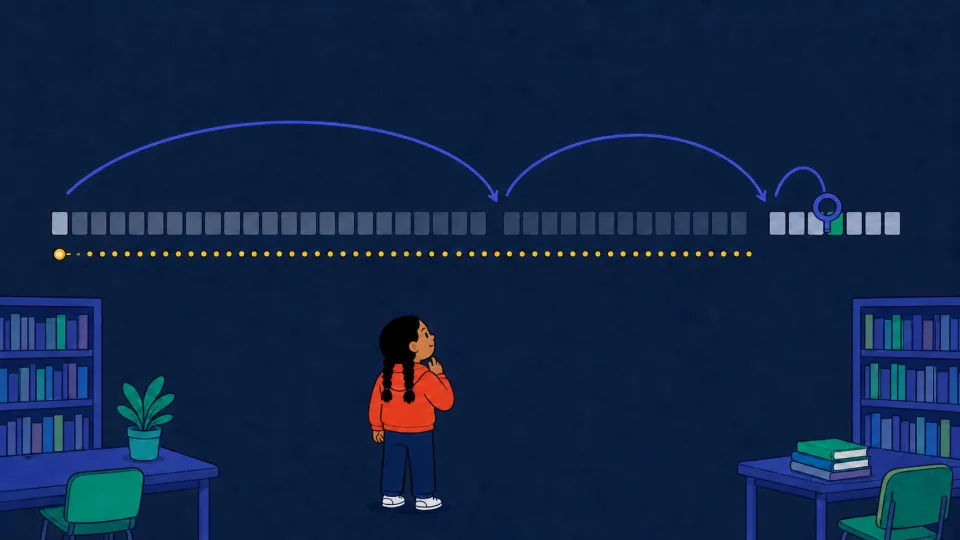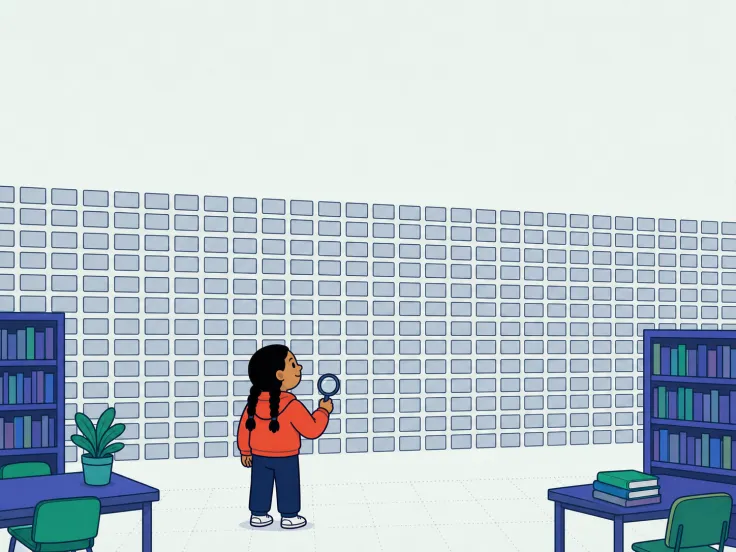
Sorted means the names run from A to Z. That tells us which direction to move after a peek—but not Ravi’s exact place, because some letters have many more names than others.
Why start in the middle? It splits the actual pile into two equal groups, no matter how many names begin with each letter. Tap the unknown middle card to read it.
Now the two search plans make sense. The gold creeper starts at A and reads every name. The indigo halver reads the middle of the names still possible, keeps the correct half, then repeats.
SAME GOAL: FIND RAVI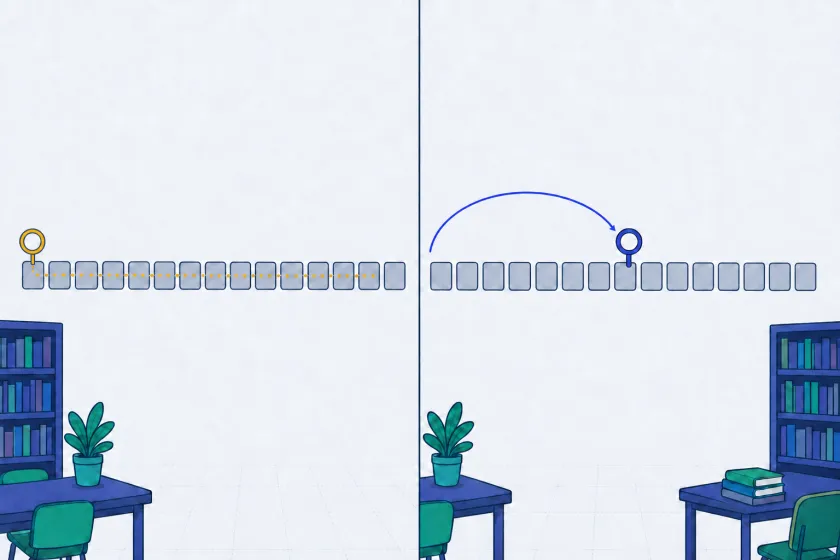
Now number the 100 card places to count the work. We can see Ravi at place 88; the searchers cannot. They may only read a name and compare it with Ravi. Drag the gold creeper from place 1.
Undo the drag and the count falls again.
For the race, Ravi is hiding at place 88 in the same 100-name A–Z list. The creeper must cross the row. The halver uses each name it reads to rule out one side.
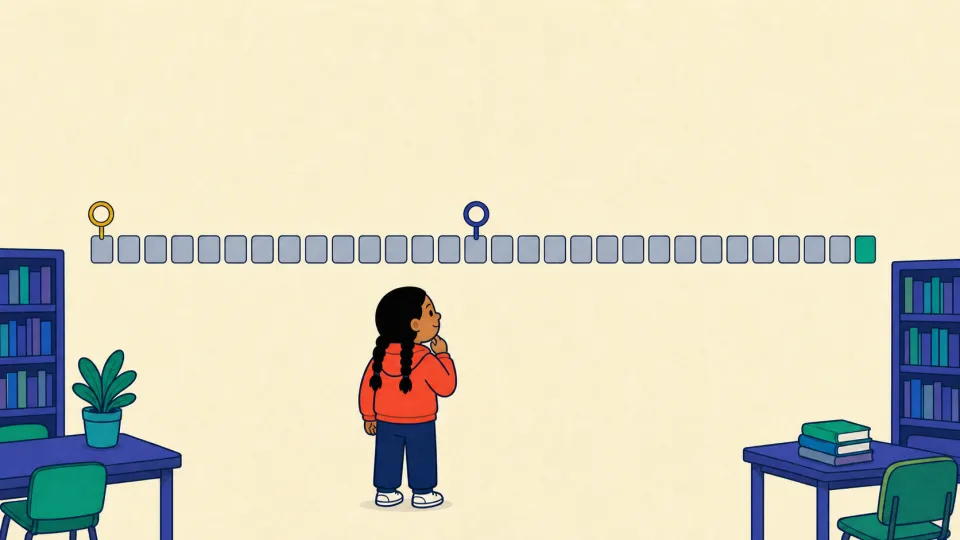
How few peeks could the middle-jumper need?
Each comparison can rule out a whole half.
Ravi is at place #88 in a sorted list of 100 names. How many names might the halver need to peek at?
Step through the three peeks
halver: ready · creeper: ready