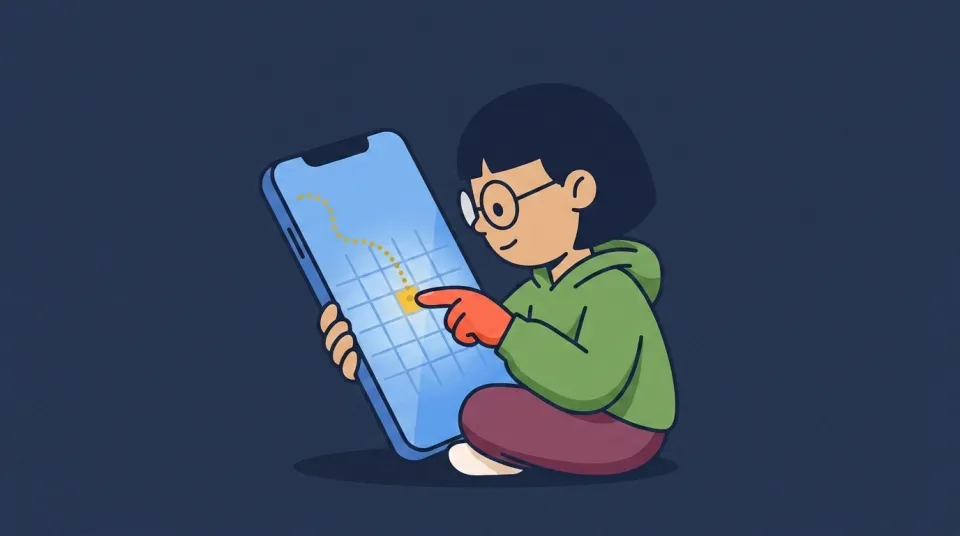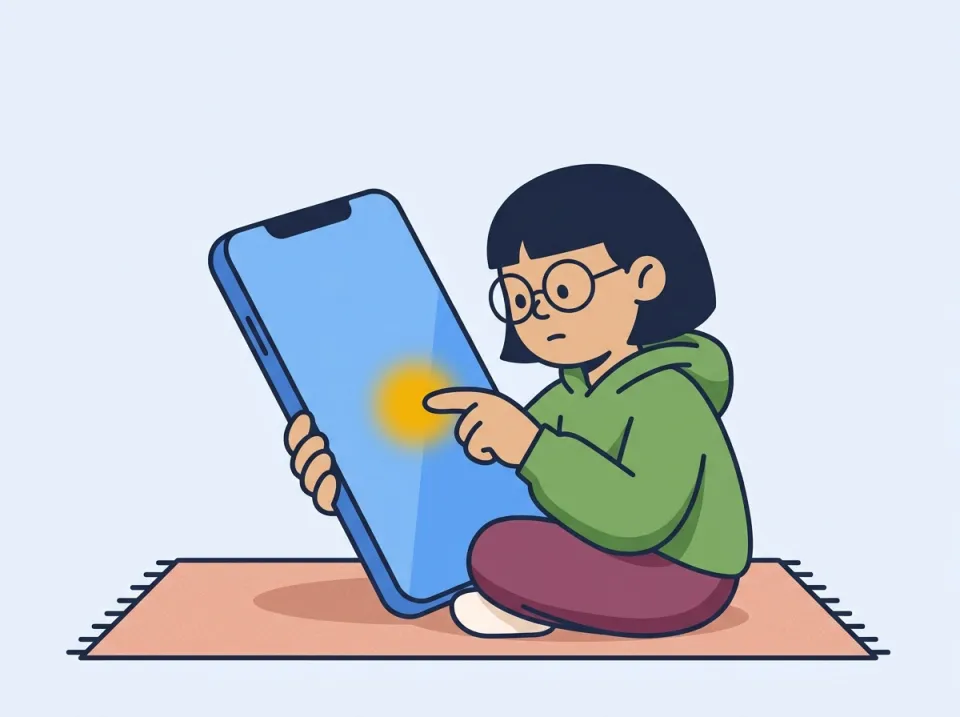
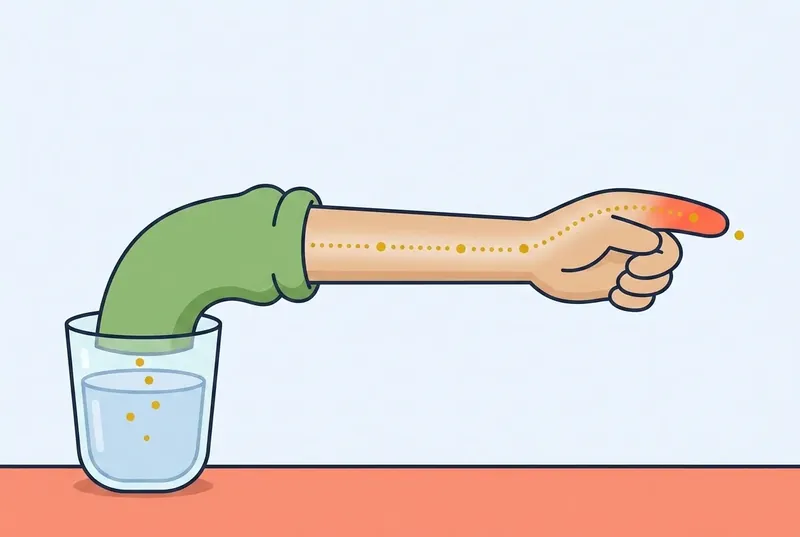
First secret: you carry electricity. Your body is full of salty water, and salty water carries charge — so your skin is a soft wet wire that can sip a little.
Second secret: the glass hides a grid. Tap to switch it on — tiny squares each hold a puddle of charge, waiting for something to sip from them.
Two kinds of touch. A finger or a metal spoon is a conductor — it sips charge from the square it lands on. A plastic tip is an insulator — it touches, but no charge flows.
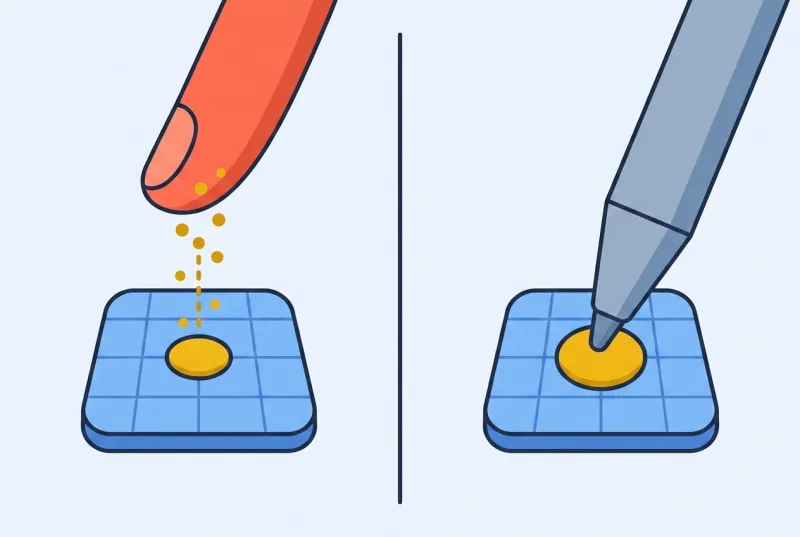
Your turn. Pick a toucher, then tap a spot on the screen — watch the charge meter.
A conductor sips charge; an insulator can't. Tap and see.
But you never tried pressing…
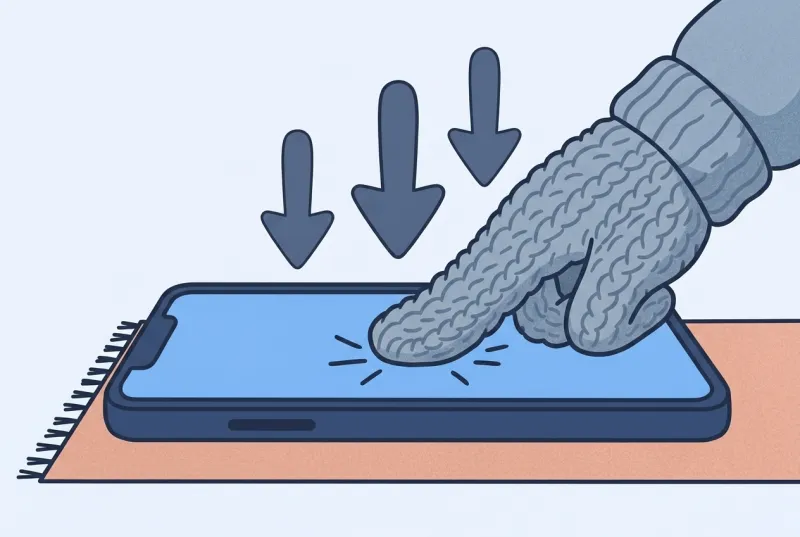
Put on a thick wool glove and mash the screen as hard as you can. Surely all that force pushes a touch through… 🤔
You just saw: only a conductor can sip charge.
Wearing a thick wool glove, you press the screen as hard as you can. Does it notice your tap?
Press the gloved screen — from feather to MASH ⬇
Slide all the way to MASH IT.