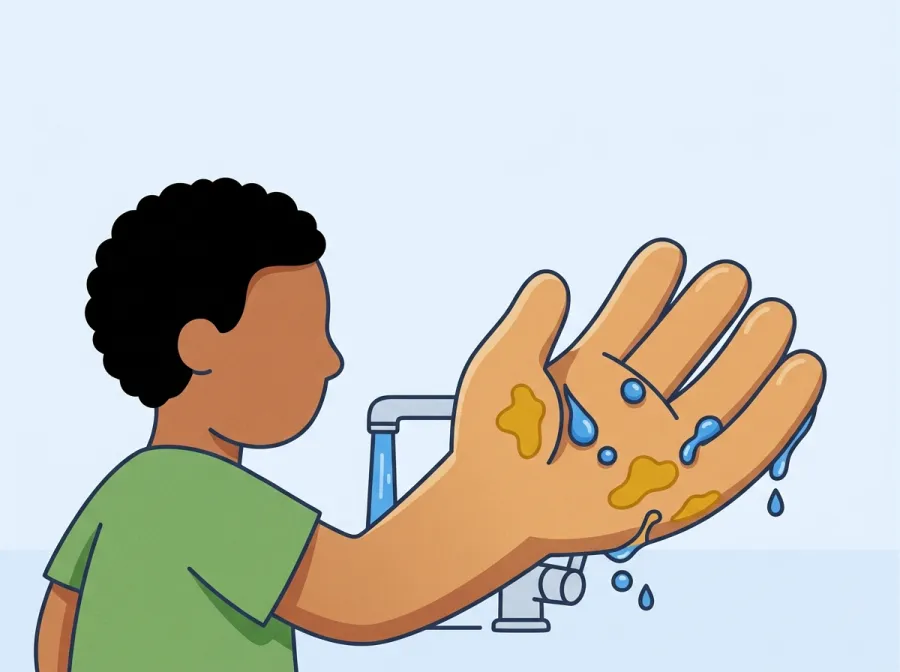
First clue: water and grease refuse to mix. Water drops would rather hold onto each other, so on greasy skin they bunch into beads and slide right off — leaving the grease behind.
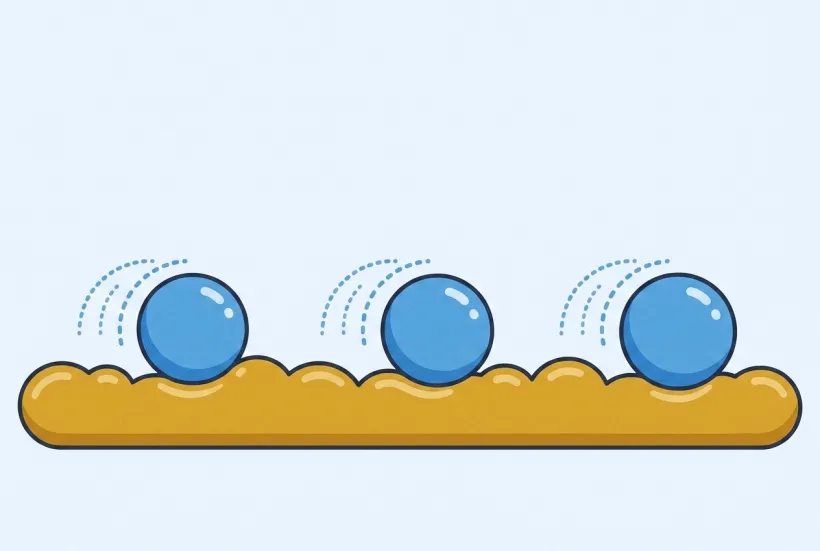
Watch it happen: every water bead rolls straight across the grease and off the edge. It never picks up the gunk.
Water can slide over grease all day and still leave every bit behind.
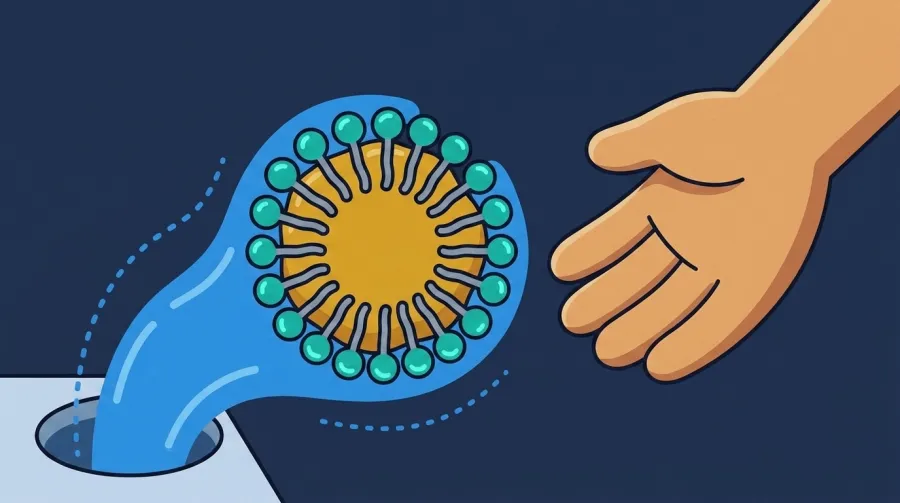
Now meet soap. Each tiny soap molecule has two ends that want opposite things: the teal head loves water, and the long grey tail loves grease. One piece, two jobs.
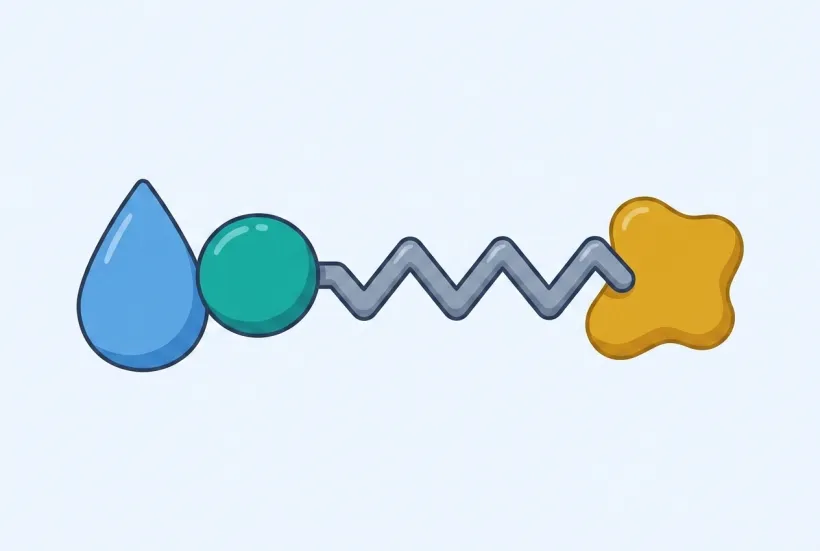
Your turn: drag the soap molecule. Watch the grey tail dive into the grease while the teal head stays out in the water — every single time.
Drag the soap toward the grease blob…
Two greasy hands, one tap.
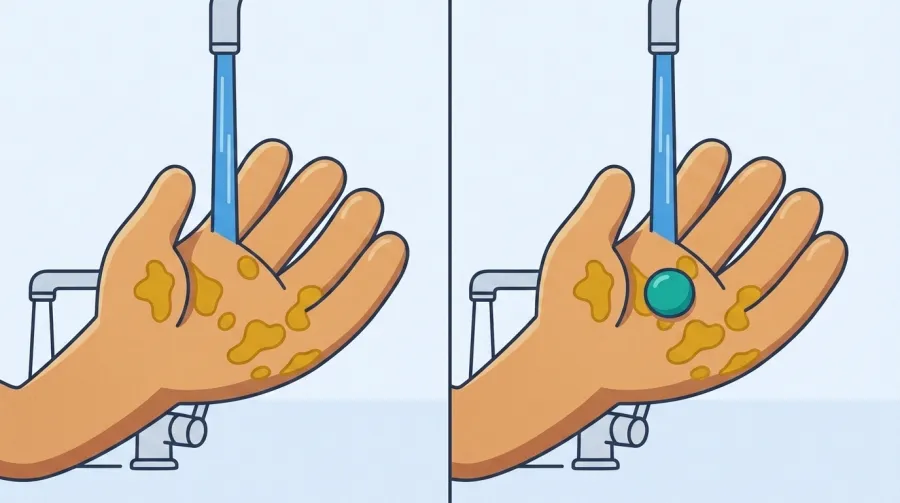
The soap is rubbed in. Now the tap can start as a tiny trickle or a strong stream. Does washing need brute force? 🤔
The soap has already wrapped around the grease.
What changes when you turn the tap from a trickle to full blast?
Turn the tap up and watch both hands 🚿
Plain water
Soapy water