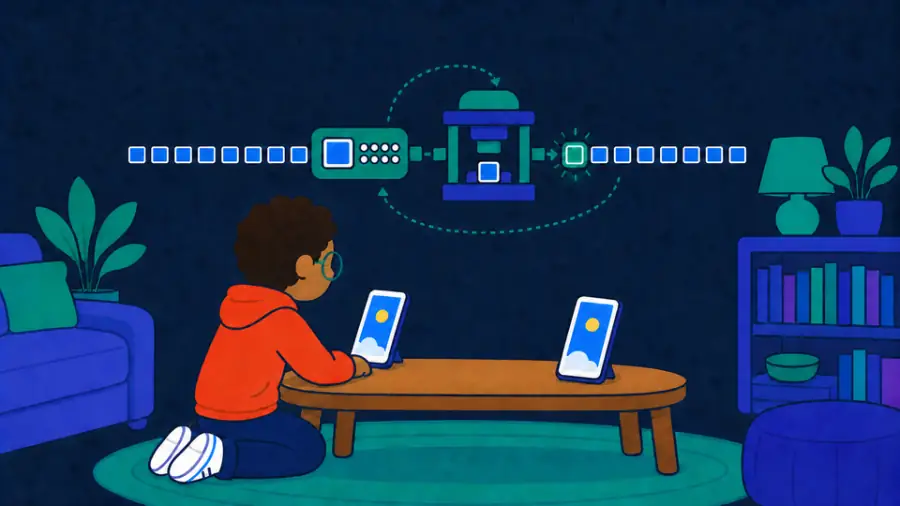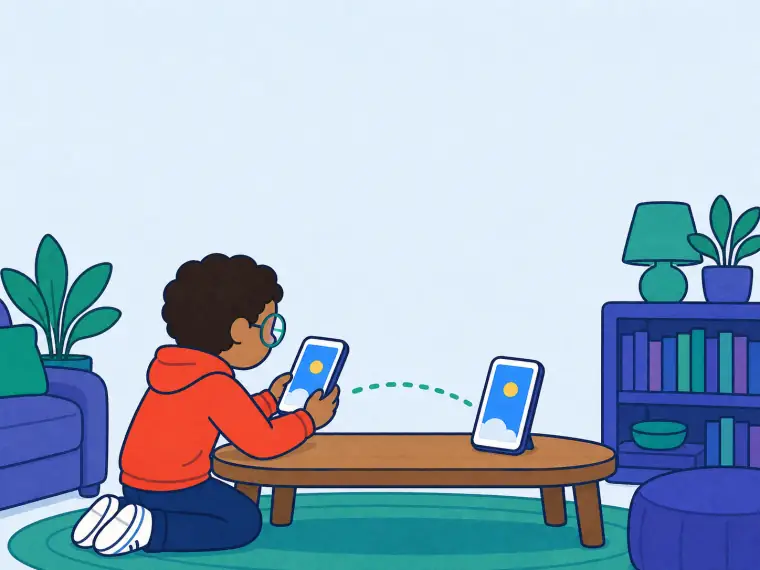
First clue: a picture is a grid of tiny colored squares called pixels. Saving it means remembering one box, then the next, all the way across.

Four neighboring pixels happen to match. Could the phone replace them with one short instruction and still remember all four?
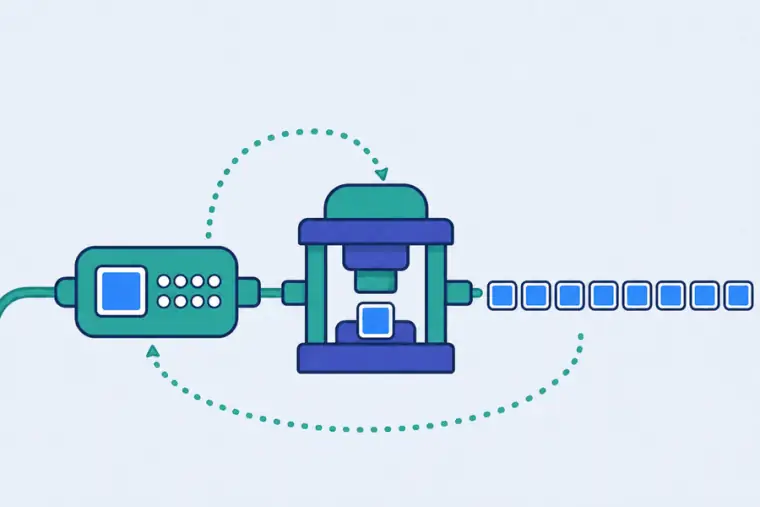
Nothing vanished. The tag keeps the color and how many, so the phone can stamp the exact row back later. This squeeze loses no detail.
Move the slider. Watch the pixel row above and the stored tags below change together. What kind of pattern makes the count move?
Try both ends. Which kind of row needs fewer tags?
Same grid. One tiny interruption.
Both pictures use the same 16 × 10 grid. One is all blue. The other changes one 3 × 3 patch into a yellow sun.
An all-blue 10-row sky would fold to 10 tags.
How many stored tags will the whole sky-with-sun picture need?
Fold the sun's rows.