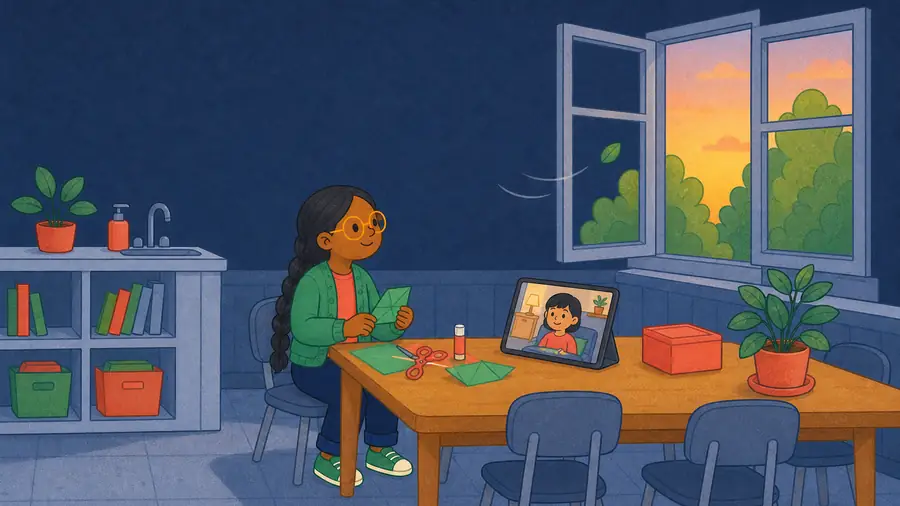
How could a respiratory germ find a way in?
A cough, shared air, hands, and nearby surfaces can all be part of the story. Spot the route puzzle—without blaming anyone.
It is not air OR touch
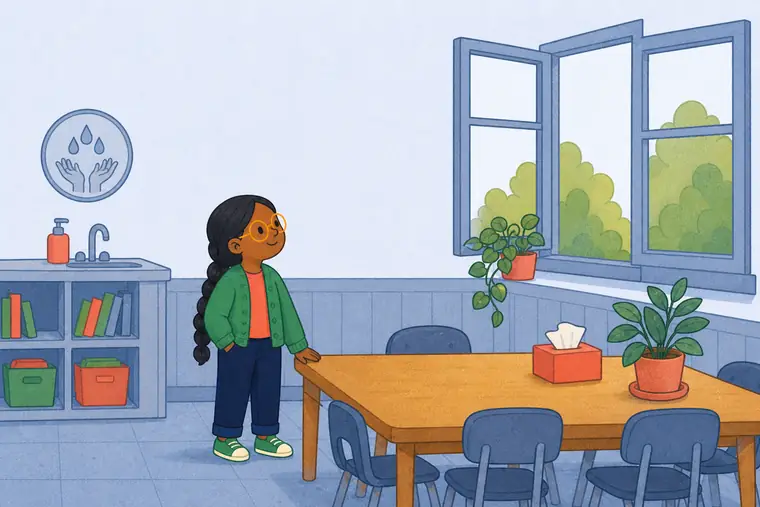
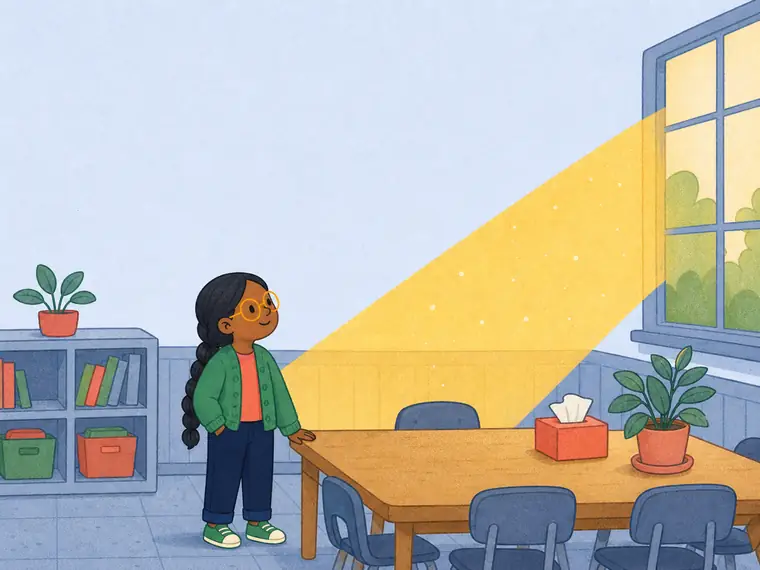
Some respiratory germs can travel in shared air, land nearby, or move from hands and objects to the eyes, nose, or mouth. The mix depends on the germ and situation.
Three paths can overlap
Possible path 1 of 3 · particles in shared air
Useful layers work at different steps
No single layer is a magic shield. Choose current guidance for the place and people involved.
Masks, air, distance, hygiene, staying home, and vaccination do not all do the same job.
First, try one half-catcher
These are possible-path tokens—not people, illnesses, or real-world percentages.
What reaches catcher 2?
Sixteen new path tokens and two matching toy catchers are ready. Each catcher halves the group it is given—but the handoff is still covered.
Make a prediction before the paths move.
Catcher 1 will split 16 into two groups of 8. The next input is covered. What do you predict catcher 2 gets?
Watch the handoff, then read the whole chain.