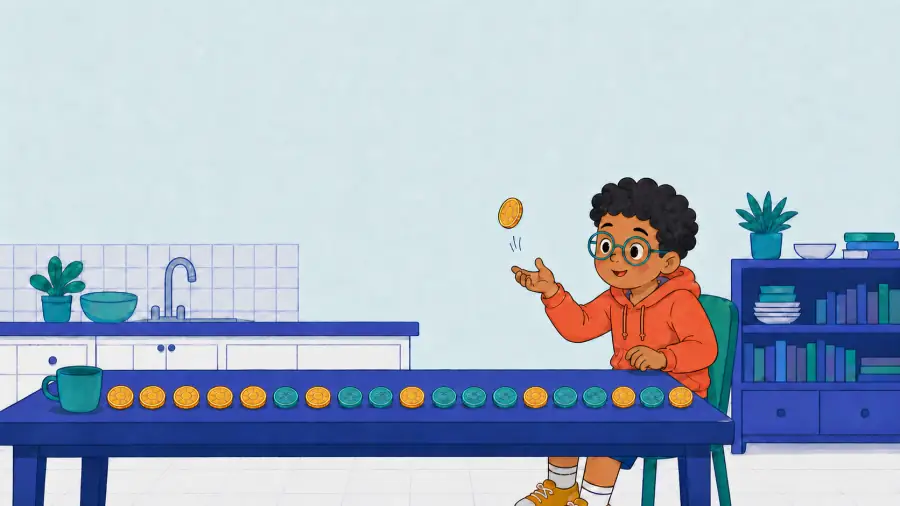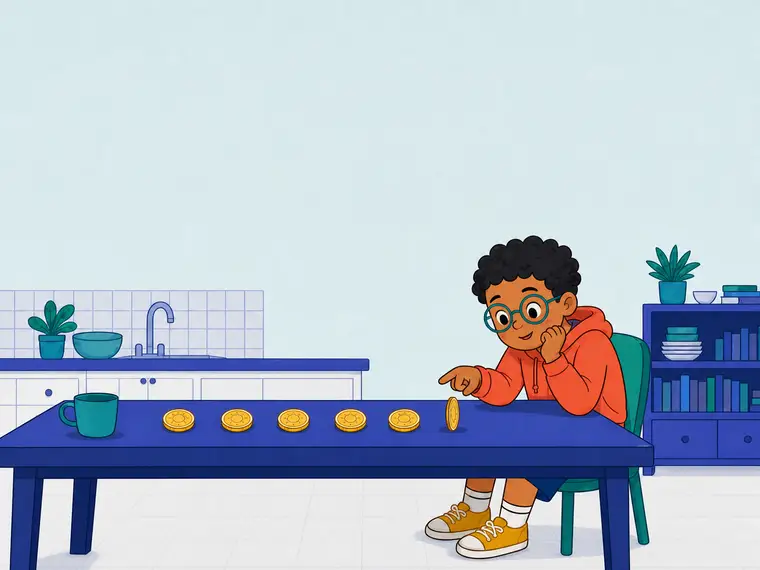
Start with the coin itself. A fair coin has two matched faces: same size, same weight, neither one built to win. Tap to inspect both.
A toss is a tiny machine: your thumb pushes, the coin spins, air nudges it, and the table stops it. Small changes make the landing hard to predict.
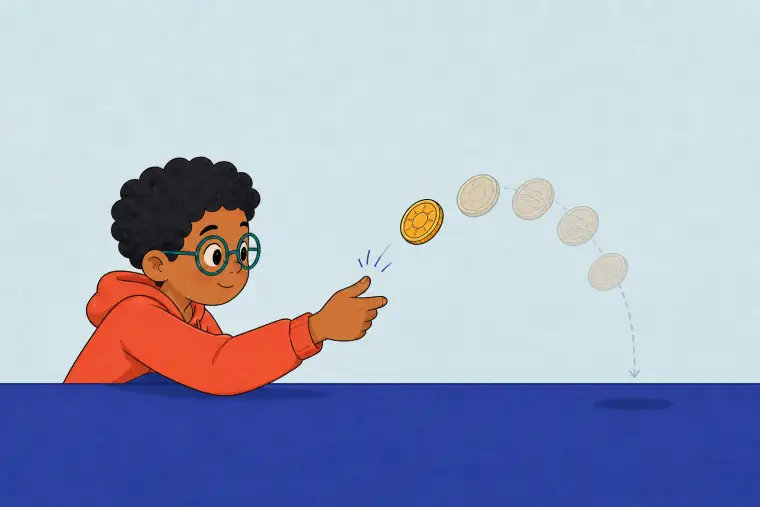
That next landing is made during the toss — but could the old row still tug on it somehow?
Now the two stories meet.
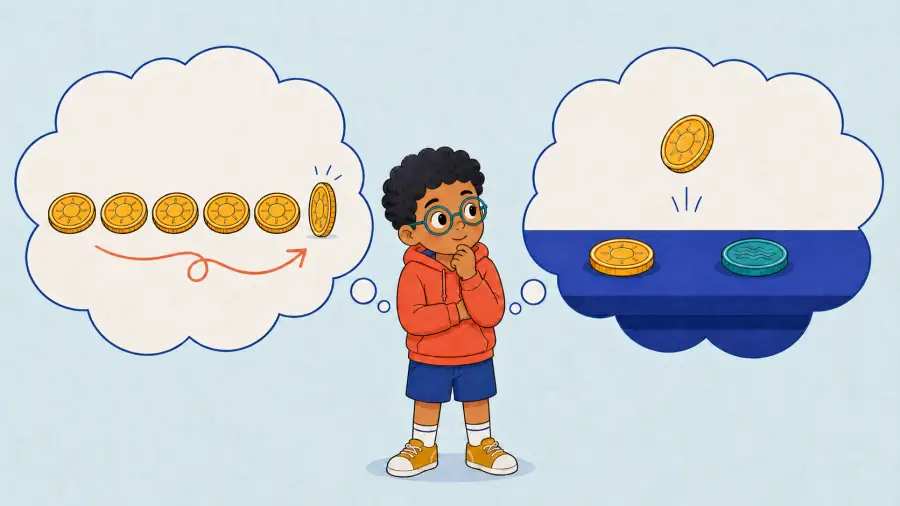
The catch-up story says five heads make tails “due.” The fresh-toss story says the same two matched faces begin again. The coin has not landed, so both stories are waiting… 🤔
Try the toss machine. Every tap starts a new push, spin, and landing. Build whatever little run happens — but do not decide what a streak means yet.
No tosses yet. The next face is hidden.
A short run can appear in any messy sequence.
Two fair coins. Two opposite streaks. Only the next toss counts.
Maya tosses after five heads. Leo tosses after five tails. Across many repeats, who should get more heads next?
Repeat both setups. Tally heads on only the next toss.
The old streaks stay out of both tallies.