Can a message fix itself if some of it gets scrambled on the way?

A scratched QR code still scans. A staticky call still comes through. How does a message arrive perfect when bits of it got knocked sideways?

1Two things to know first

A message is just squares, and you can count them

You need two small ideas. Watch each one happen:

A message = on/off squares

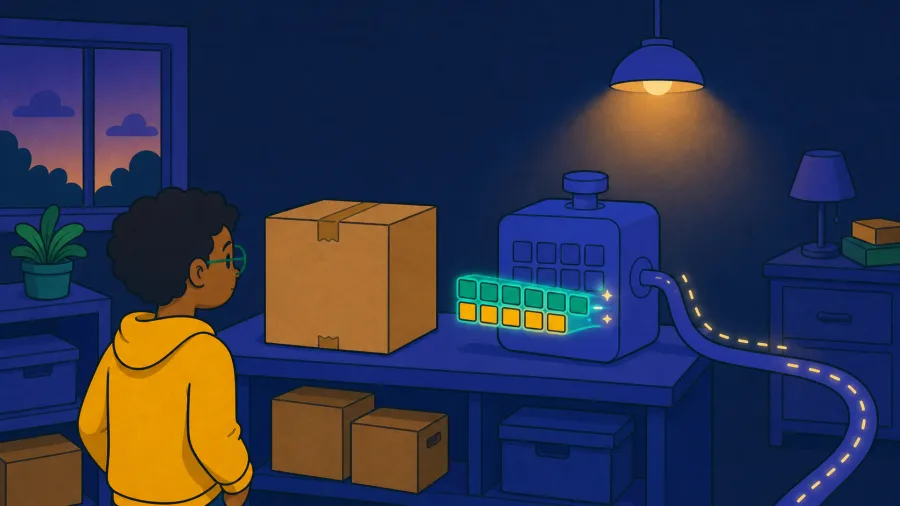
Everything a computer sends is really a grid of on or off squares — bright or dark, like tiny light switches.

Count: odd or even?

For each row you can add one checker square that remembers a secret: was the number of bright squares odd or even?

2Two ways to send the same grid

Bare message vs. one with checkers

Bare grid 📭

Just the message squares. If a glitch flips one, it arrives looking like a perfectly normal — but wrong — grid. Nobody can tell.

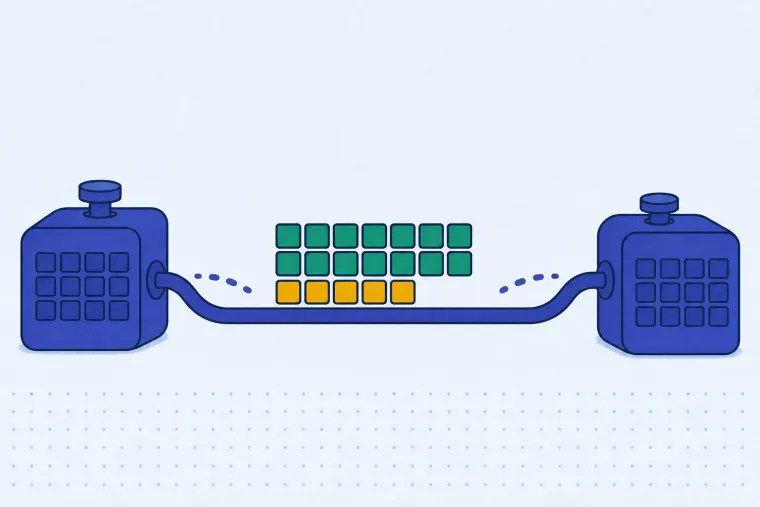
Grid + checkers 🛡️

Add one checker square on each row and each column. Now every row and column has a count that's supposed to match. Keep this in mind…

3Make a glitch on purpose

Flip a square and watch the checkers notice

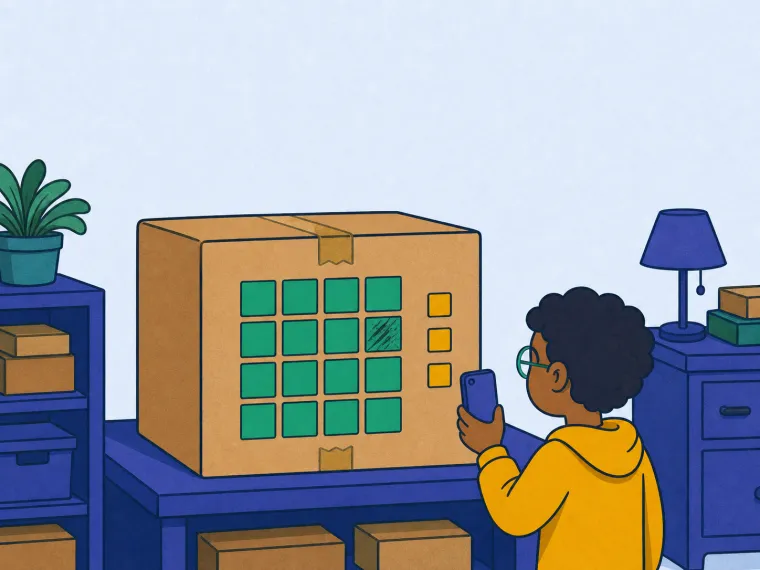
Here's a grid with its checker squares already added (the amber edge). Drag the glitch to flip one square — watch which checkers stop matching.

Glitch strength: no glitch yet
CLEANONE SQUARE FLIPPED

Push the glitch up and one square flips red. The checker on its row turns red, and so does the checker on its column — their counts no longer match.

4Now predict — then watch it heal

One square got flipped on the way. What can the receiver do? 📡

The receiver never saw the original. All it has is the grid that arrived plus the checker squares. One square got flipped somewhere on the trip.

Guess before you watch

With the clever checkers added, what can the receiver actually do about that one flipped square?