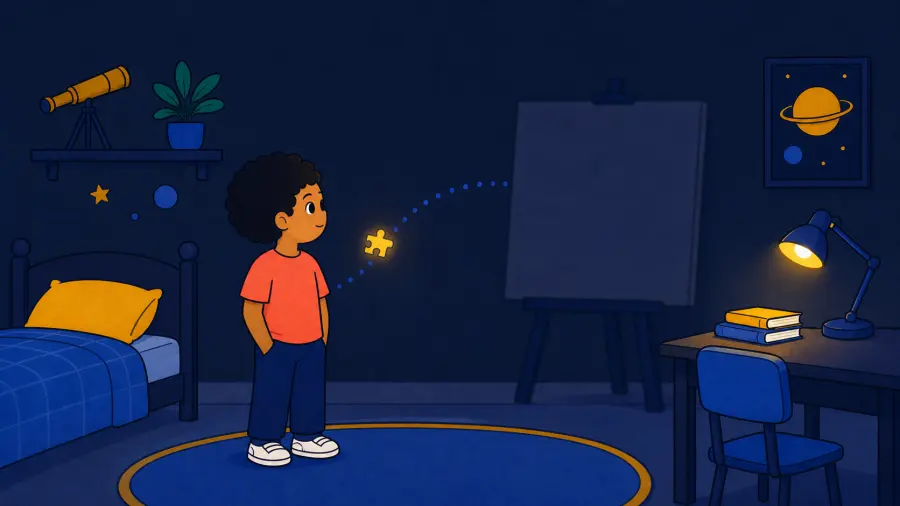
your mission
hunt started — keep your RIGHT eye on the cross
Hunt the hole hiding in your vision
Cover your LEFT eye. Somewhere beside that cross, a dot can slip into a place your RIGHT eye cannot report. Which side is it hiding on?
An eye is a light catcher
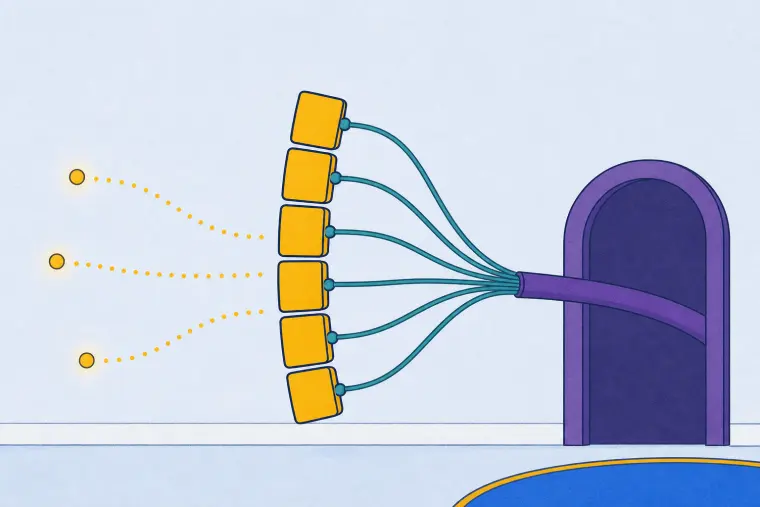
Tiny sensors catch light and send messages along wires. All those wires gather into one thick cable that needs a doorway out.
Light crosses on the way in
one side outside → the opposite side inside
The doorway has no sensor
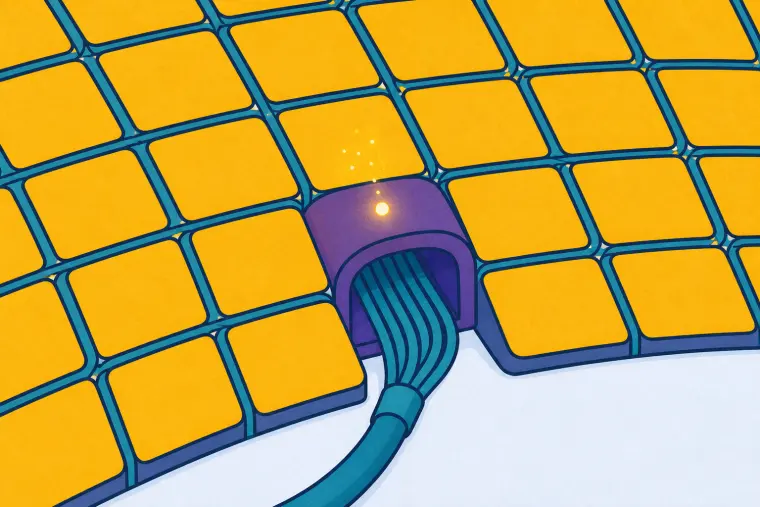
Light can land at the cable exit, but no light sensor is there to send the message. That is the missing patch.
Find its cable exit
landing spotworking sensor
nose-side sensorcable exittemple-side sensor
Inside patch. Outside path.
Light crosses. The missing patch sits on the nose side inside your RIGHT eye. Which outside path reaches it?
?
?
NOSE SIDE inside · RIGHT EYE · keep looking at the cross
Commit before the real dot moves.
Keep only your RIGHT eye open. Which side of the cross should the dot travel to find the missing patch?
Keep staring at the cross. Drag the dot all the way.
test tripbeside the cross
startfarther right