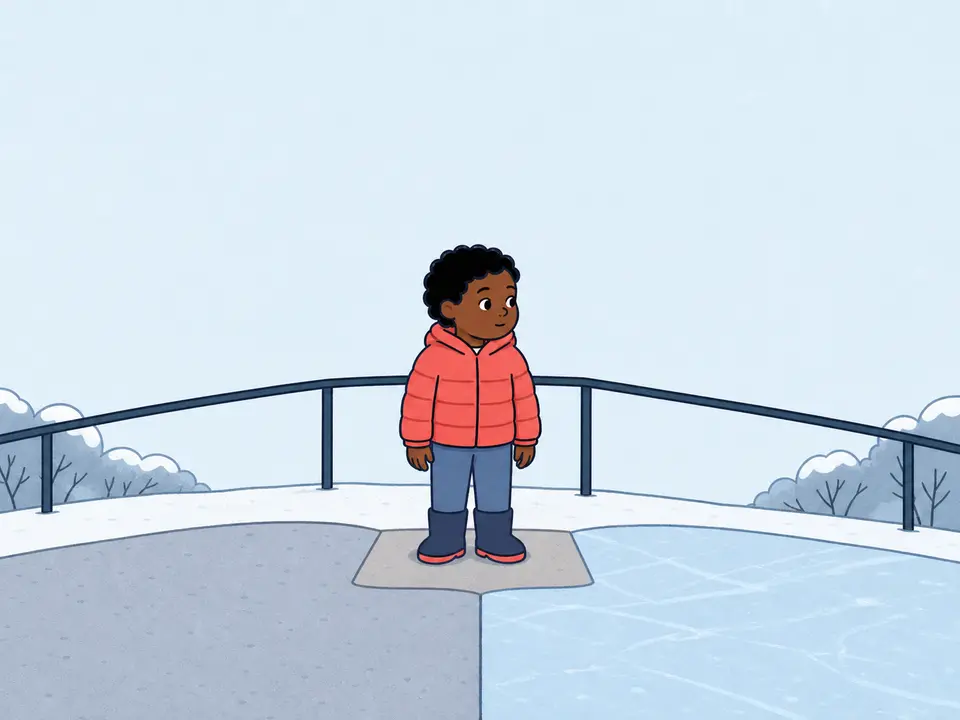
Why do your shoes grip the floor but slip on ice?

Same shoes. Same gravity pulling down. So why does one floor hold you and the other sends you flying? The answer is a hidden tug-of-war between two surfaces — let's find it, then try to break it.

1The two things in the tug-of-war

Grip holds you. Tilt pulls you down.

Whenever something might slide, two forces fight. Watch each one on its own:

Grip (the stickiness)

How hard two surfaces hold each other. Rough, rubbery stuff grips tight. Glassy, icy stuff barely grips at all. It's about the pair that's touching.

Tilt (the downhill pull)

Gravity always tugs straight down. But the steeper the slope, the more of that tug points down the ramp — trying to start a slide.

2Same block, two floors

A gritty ramp vs a glassy ramp

Gritty ramp

The grippy floor

Think rubber soles on a rough sidewalk. The two surfaces grab each other hard, so grip wins the tug-of-war easily. The block just sits there.

Glassy ramp

The slippery floor

Now picture the same block on ice. The surfaces barely grab at all, so there's almost no grip to fight the downhill pull. The tiniest tilt and… off it goes.

3Your turn — build a ramp

Drive the tug-of-war yourself

Change the grip of the floor and the tilt of the ramp. Watch the two arrows fight: the amber downhill pull vs the most the teal grip can hold. When the pull beats the grip, the block lets go.

holding still
Floor grip: medium
GLASSY ICEGRITTY RUBBER
Ramp tilt: 18°
FLATSTEEP

4The trick question

Two ramps, the EXACT same tilt 🧊

Here's the catch: both ramps are locked at the very same gentle angle. One is icy, one is rubbery, with the same block on each. If only steepness mattered, they'd do the same thing… right?

Guess before you find out

Same block. Same gentle tilt. One ramp is icy, one is rubbery. What happens?