
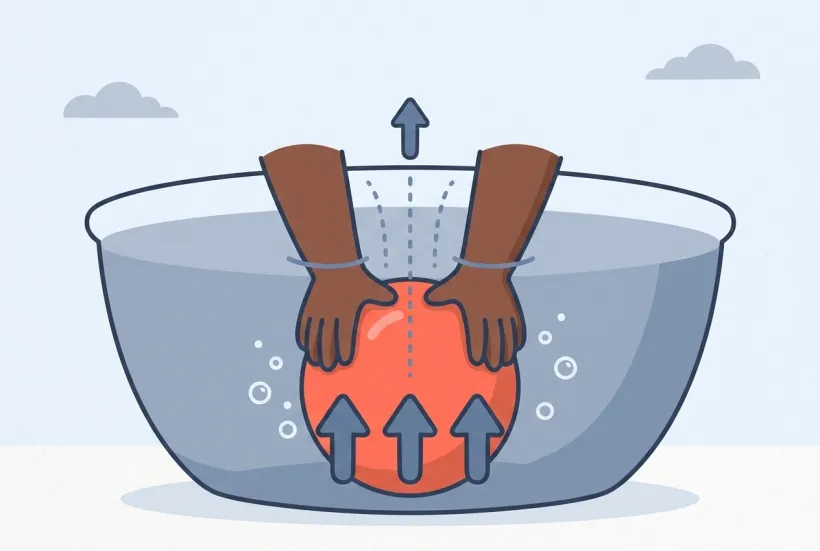
Push a beach ball under water: the water pushes UP. The ball floats if it weighs less than the water it pushes aside. Air works the same way.
Two balloons: one holds plain air, one holds light helium. Tap each and see which way the balloon moves.
Air plus rubber is heavier than the air it pushes aside. Helium plus rubber is lighter — up it goes.
Air isn't the same all the way up. Gravity piles it thick near the ground and leaves it thin way up high. That thin air is where jets like to fly.
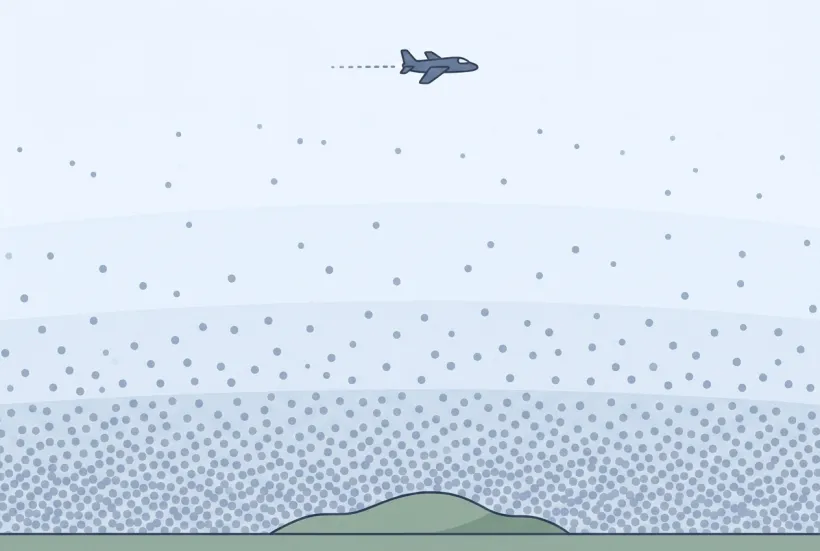
Slide up through the sky. Watch how the air specks thin out the higher you climb.
Now let YOUR balloon go. Watch how high it climbs — and it just keeps going and going.
It rises a couple of metres every second, into thinner and thinner air.
One more thing about that rubber…
These balloons use the same rubber. One starts filled tight; the other has slack left. Both will swell in thinner air. Which one runs out of stretch first? 🤔
Both balloons rise through the same thinning air.
Which one reaches its rubber's stretch limit first?
Drag both balloons up the sky ↑ and watch.