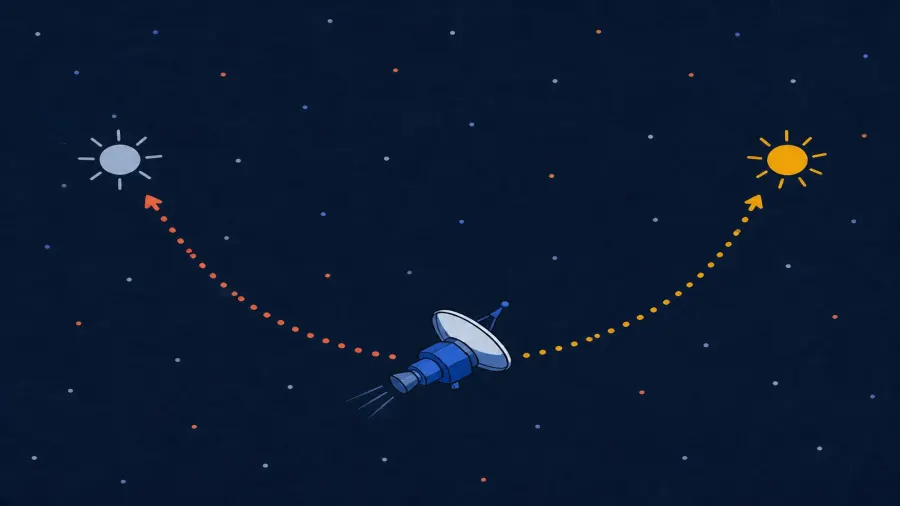
How fast does the Sun's pull fade?
The Sun keeps tugging far beyond the planets. The pull has no hard edge—but it fades steeply. Learn the square rule, then fly six times farther.
A faint pull can still bend a path
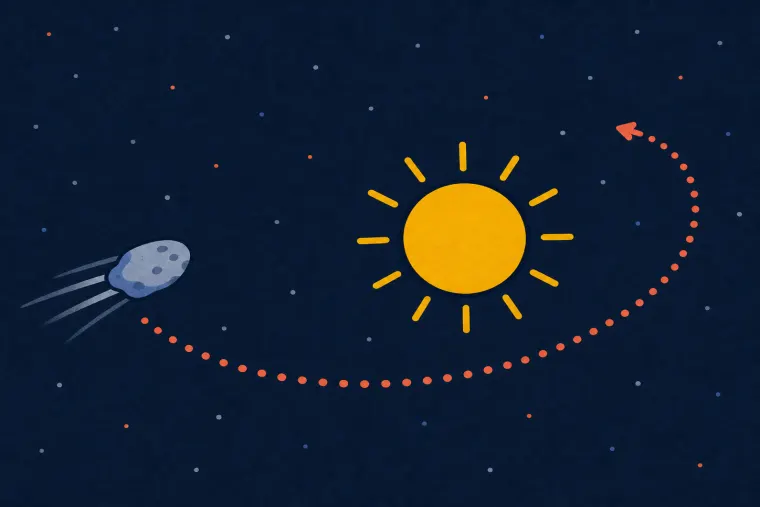
Gravity does not switch off at a fence. It weakens smoothly with distance, and other nearby bodies may eventually pull more strongly.
Distance counts twice
At 2× the distance, split the old pull into 2 × 2 shares. At 3×, split it into 3 × 3 shares.
Farther means weaker, never a cliff
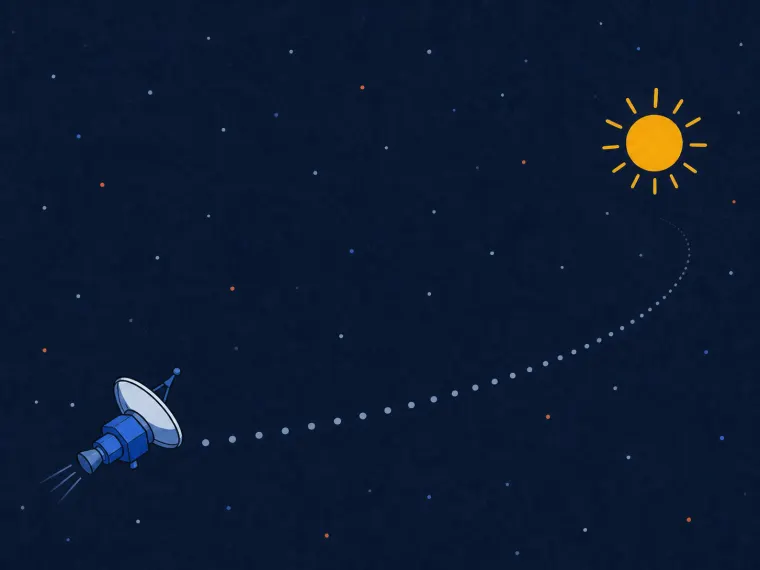
Move the probe from 1× to 5×. The pull arrow shrinks smoothly; no boundary switches it off.
Practice squaring new distances
Build exact non-gate grids for 2×, 3×, and 4×. One tile represents the remaining share.
Now fly to the sixth marker
The probe starts at 1× and will stop at 6×. The destination shows no force arrow, denominator, or favored answer.
six equal distance markers · result hidden
Commit before the new setup runs.
At 6× the distance, how strong is the Sun's pull?
Fly to 6× and build the square share grid.