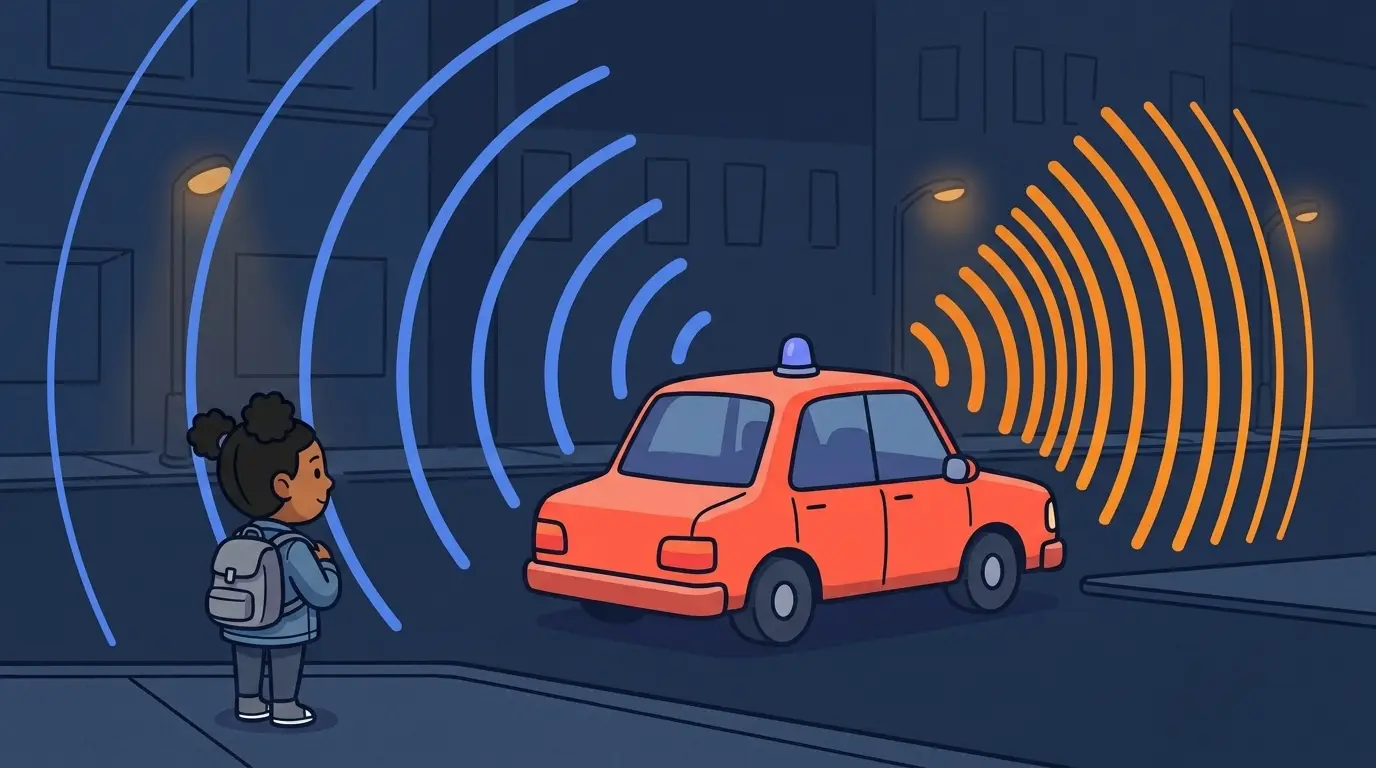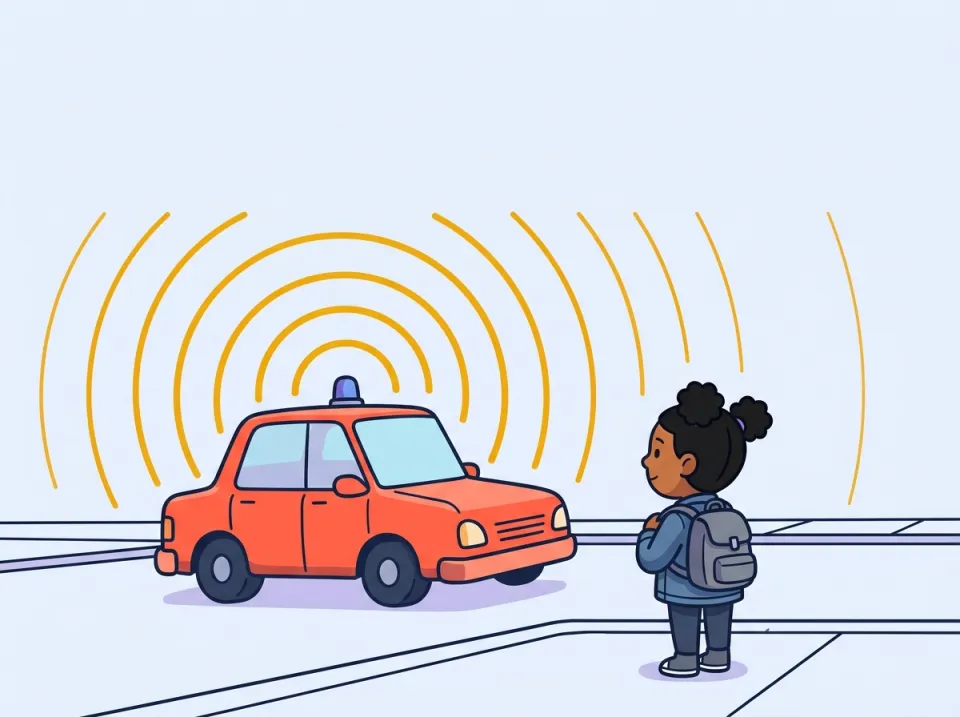
First clue: a note is just how SQUISHED the waves are. Tap it. Waves crowded close together = a HIGH note; spread far apart = a low one.
Second clue: sound always travels at ONE fixed speed. The siren can't make its sound go faster — it can only move itself while it keeps pumping out waves.

Your turn — first a PARKED siren. Speed up how fast it pumps and watch: the rings stay even every way, so both ears hear the very same note.
But now roll it forward. It drives along and chases its own waves — crowding them close in FRONT and leaving big gaps BEHIND.
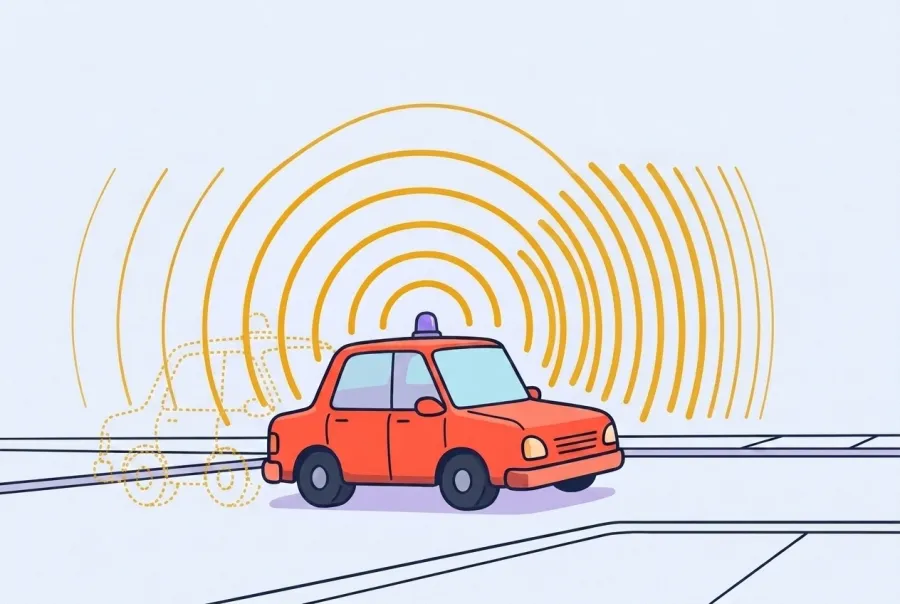
Watch it race by. Crowded waves reach the front, stretched waves reach the back. So as it sweeps past one ear… which note does it catch? 🤔
Same siren, same note — only the spacing of the waves changes, front to back.
You saw one moving siren make a high-to-low jump.
If the siren drives faster, what happens to the SIZE of that jump?
Send it racing past the ear 🚓