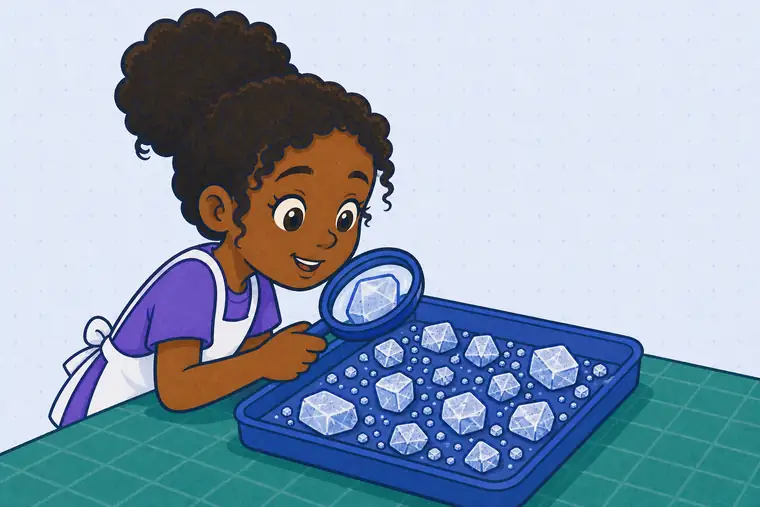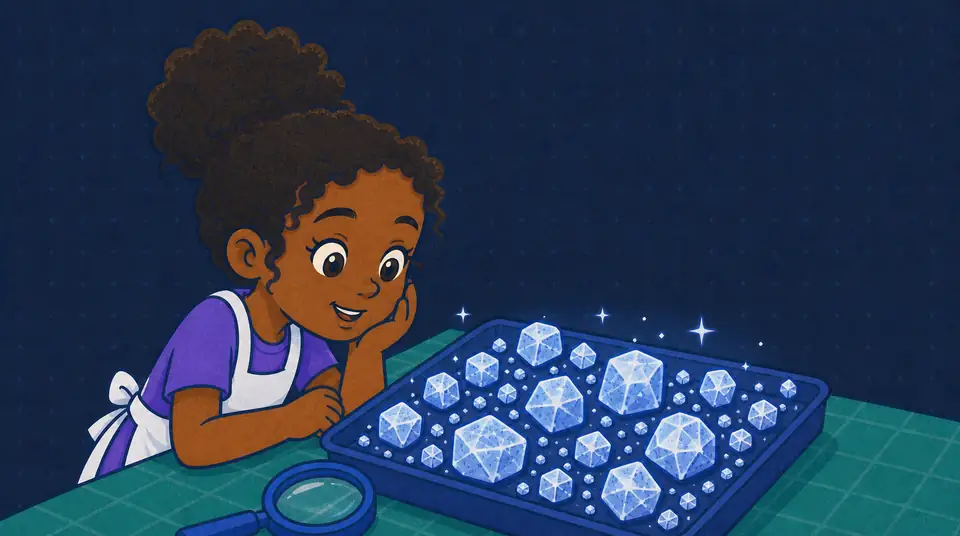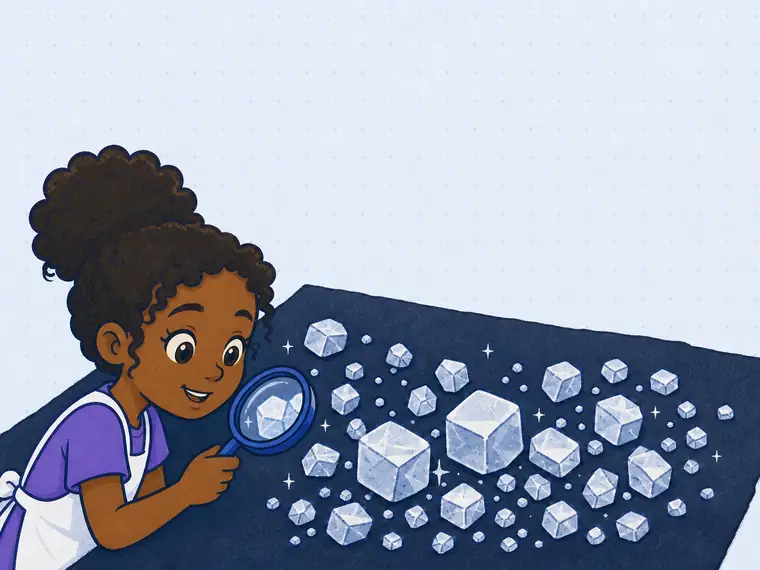
Why do salt crystals come out as tiny cubes, never as blobs?

Look at a grain of salt under a magnifier — it's a perfect little cube with flat sides and sharp corners. Nobody cut it that way. So who shaped it? Let's grow one and find out.

1What a crystal is really made of

Millions of identical blocks that only fit one way

You only need two ideas. Watch each one:

Every block is the same

A salt crystal isn't one solid lump. It's millions of tiny pieces — and they're all the exact same shape and size, like one kind of LEGO brick.

They snap into a pattern

Identical blocks only fit together one way. Each one clicks into the same repeating spot, over and over — that neat stack is what makes a straight edge.

2Two ways the blocks can land

Lined up vs piled any-which-way

Same blocks, two very different piles. The difference is whether each block lands in its right spot:

Lined up

Neat repeating grid

Every block snaps into the same spot. The outside edges come out straight and flat all on their own.

Piled randomly

Lumpy blob

Blocks land wherever they fall and get stuck. The edges come out bumpy — no flat faces anywhere.

3Your turn — grow a crystal

Add identical blocks and watch flat faces appear

Tap add a block over and over. Each new block snaps into the next open spot in the repeating grid. You never tell it to make flat sides — watch them show up by themselves.

Blocks added: 0

hold the button to add lots fast — the shape grows itself

4Now the real test

Two salty puddles — one dries slow, one dries fast 💧

When salt water dries up, the blocks left behind have to stack themselves. The big question: does it matter how fast the water leaves? Guess first — then dry them.

Guess before you dry them

Two puddles of salt water. One you let dry slowly. One you blast dry fast. Which one ends up as neat little cube crystals?