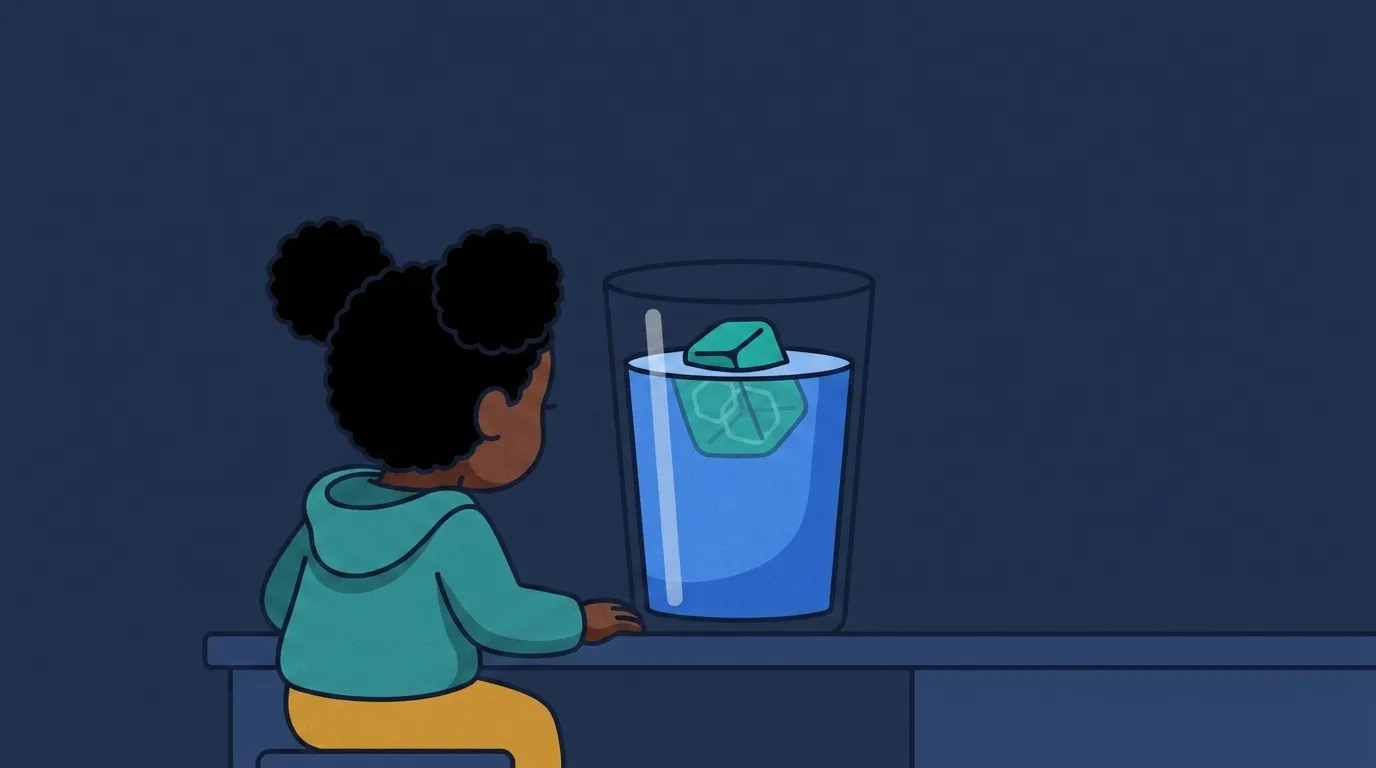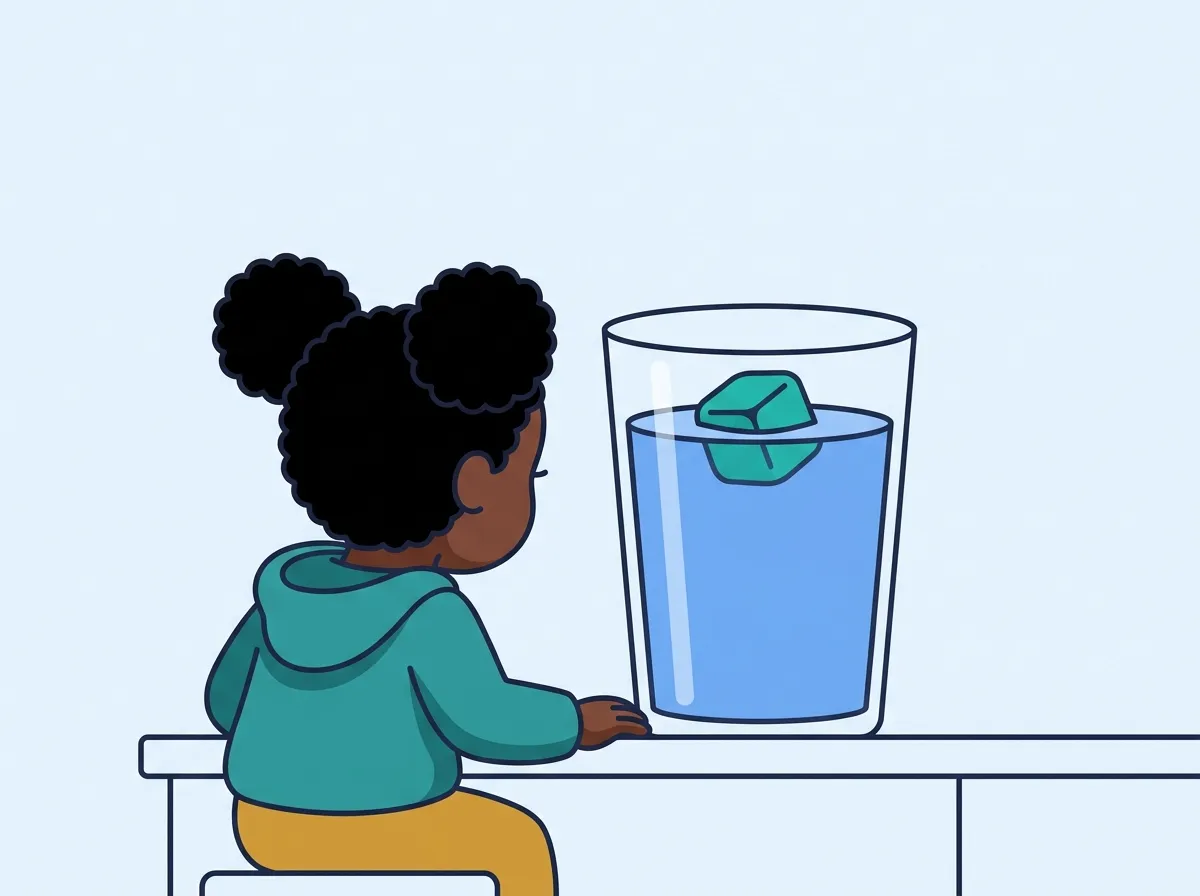
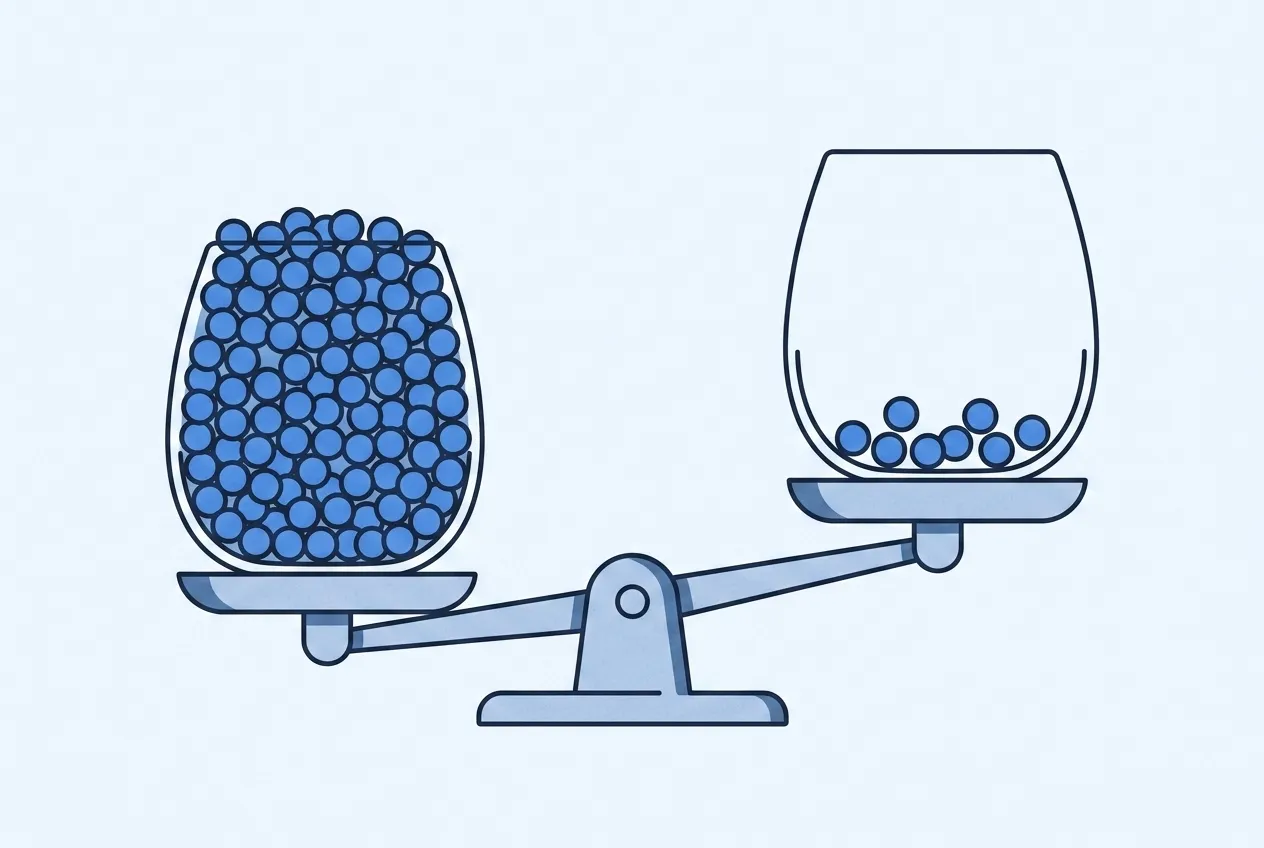
Floating is really a weigh-off. Put two same-size cups on a scale — the lighter one always rides up on top. So the sneaky question is: which cup holds less?
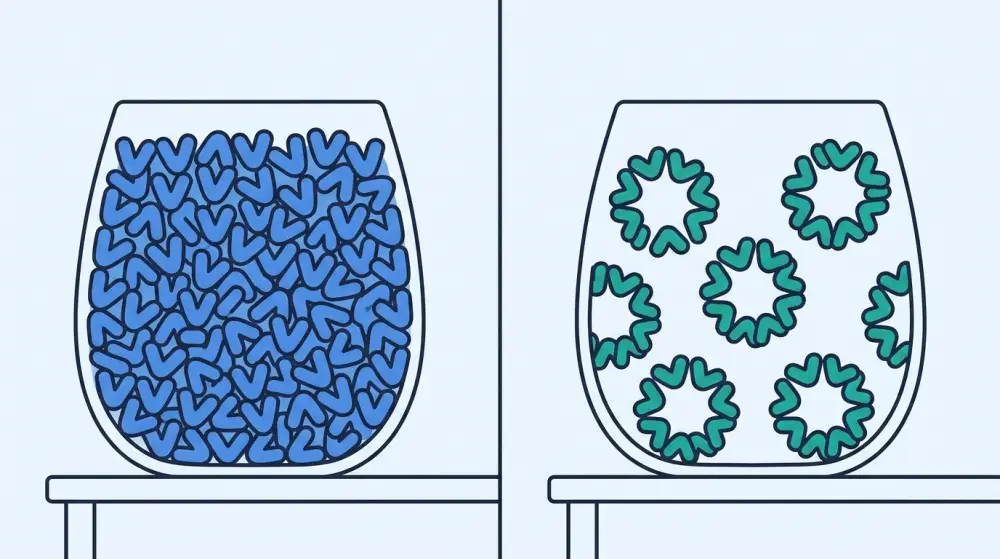
Water bits are tiny V-shapes with sticky corners. Warm bits jiggle too hard for the corners to hold on, so they tumble in a loose huddle. Tap to calm them: the sticky corners finally grab, and the bits lock hands into a stiff, roomy ring.
Same cup, two ways to pack. Jiggly bits don't hold a pattern — they squeeze into a tight huddle, so a LOT crowd in. Frozen corners grip corner-to-corner, and that grip only fits one way: stiff open rings with holes — far FEWER fit.
Your turn — be the freezer. Drag the lever to freeze and melt the left cup.
Cold calms the jiggle — the corners grab and rings lock. Warmth breaks the grip; the huddle packs tight again.
Now the real test.
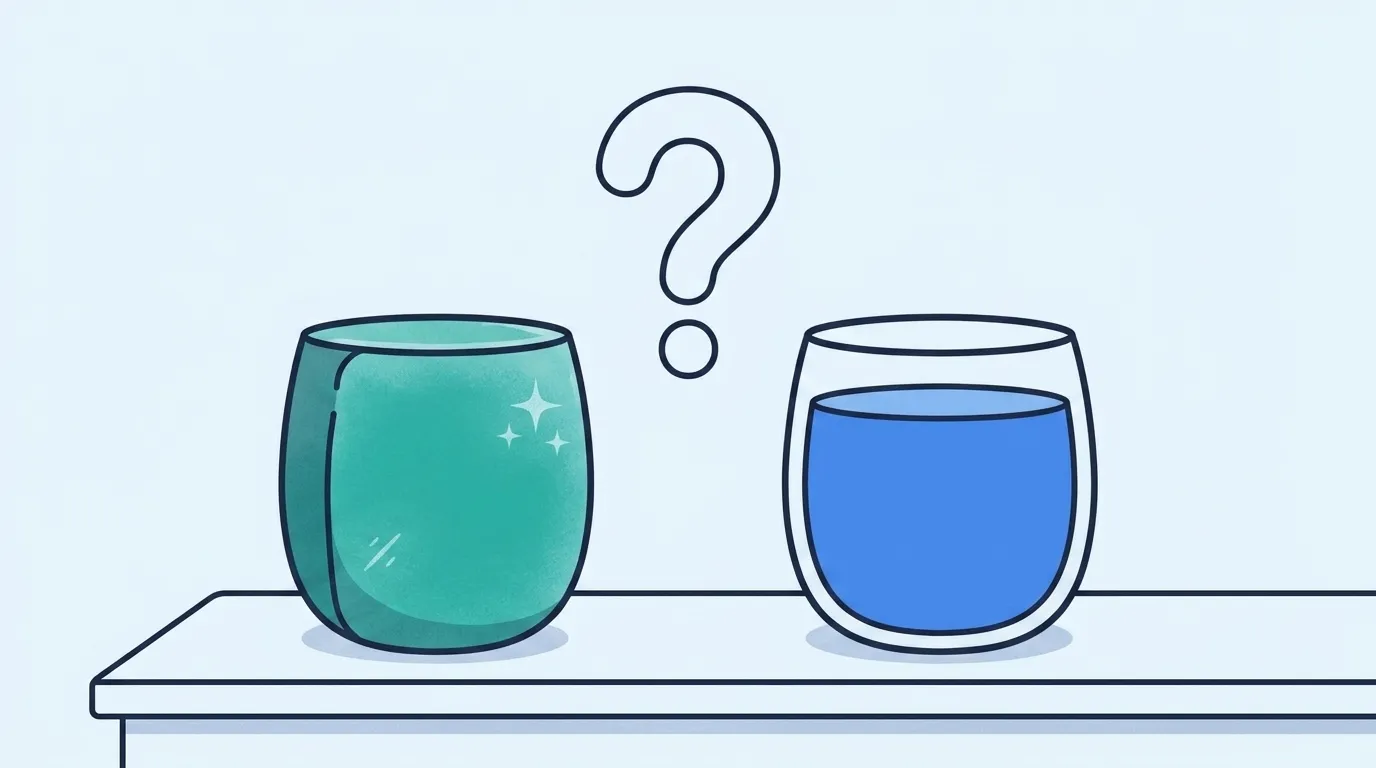
We freeze one cup solid and keep one cup liquid — same-size cups, filled to the same line. When a balance is released, which side will rise? 🤔
Solids usually feel heavier than their melty version.
Put two same-size cups on a level balance — one liquid water, one solid ice. When you let go, what happens?
Let go of the scale and watch ⚖️