Can stacked liquids catch an object that sinks in water?
Did this make sense?
Your thumbs help us make it clearer.
Thanks! That helps us make it clearer.
See it another way
Density: Syrup, Water, and Oil!
Pour syrup, water, and oil into layers, then watch a grape stop where the next liquid is dense enough to support it.
Requires internet. You’re leaving Clickory in a new tab; YouTube may show ads or recommendations.
Keep going
What else makes you wonder?
Where would a fourth liquid join while the bands stay separate?
Compare the same-sized scoop with the three known liquids, then ask whether it will stay separate long enough to make a boundary.
Could an object hover inside one layer?
Imagine its density exactly matching the surrounding liquid instead of being greater or smaller.
Is the atmosphere a kind of density tower too?
Warm and cool air can have different densities. Which one tends to move upward?
More to explore
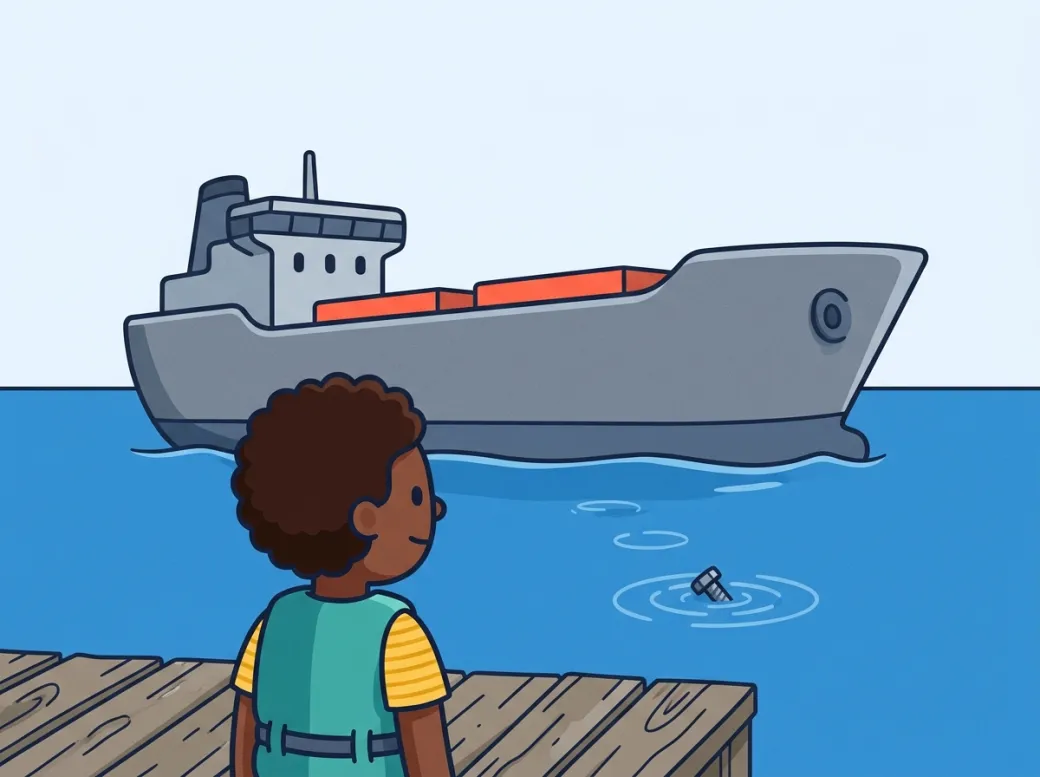
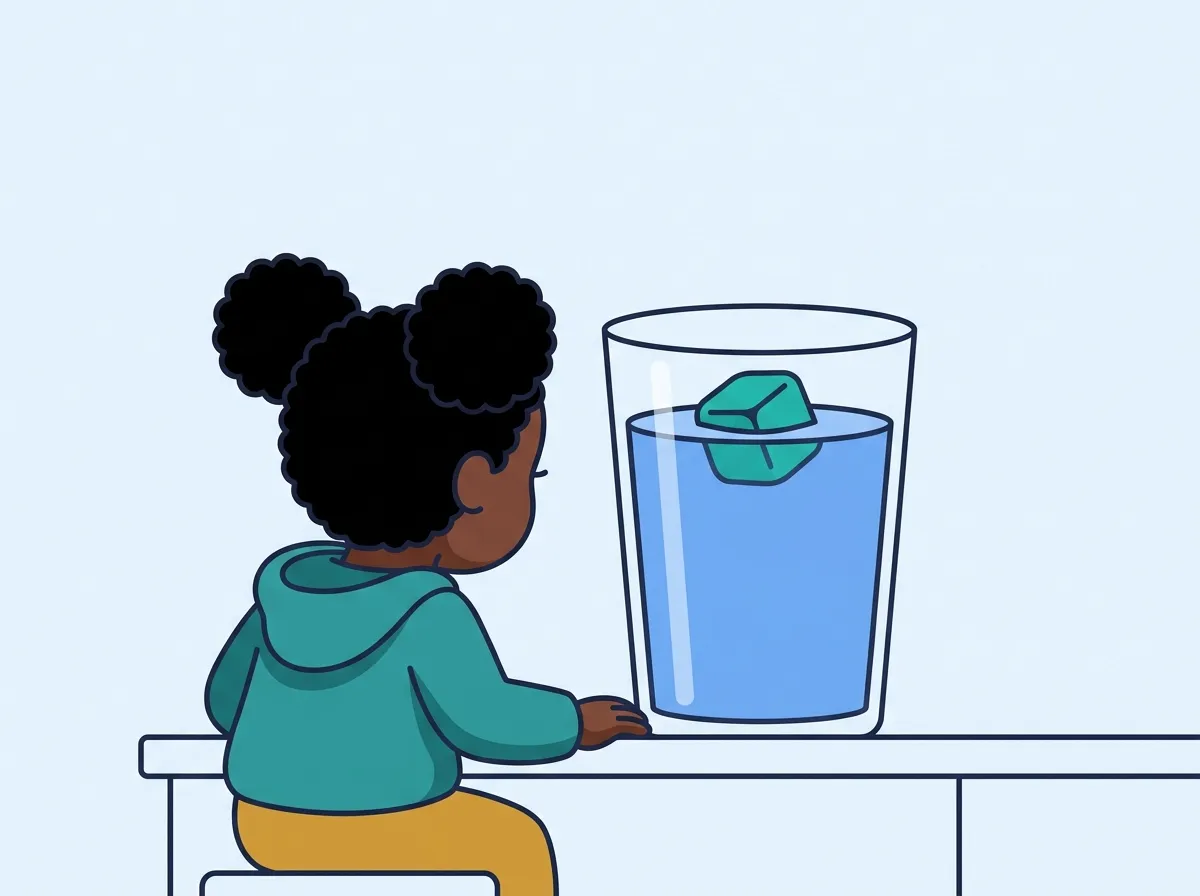
After you watchCan stacked liquids catch an object that sinks in water?
The short answer
With a slow, careful pour, oil, water, and corn syrup can form a temporary density stack: oil on top, water in the middle, and corn syrup below. Oil stays separate from water, but corn syrup and water eventually mix and the syrup dissolves.
Try this next
- Does pouring order matter? Choose a new order, pour slowly and carefully, and compare the temporary bands before the syrup-water boundary blurs.
- What if two liquids mix? Compare oil and water with corn syrup and water. Predict which boundary can last and which one will eventually disappear.
The whole story
How it works
While the bands remain separated, gravity places the denser corn syrup below water and the less-dense oil above it. A solid continues through fluids less dense than itself and is supported when it meets a denser fluid. The stack is a visible density map only during that separated-band window.
What people get wrong
The first liquid poured does not automatically stay at the bottom, and an object's total weight alone does not decide whether it sinks. A careful pour can show density order for a while, but density does not prevent liquids such as corn syrup and water from mixing.
The catch
This three-band stack is temporary. Corn syrup can sit below water for a while after a careful pour, but the two eventually mix and stirring speeds that up. Shaking does not make their boundary rebuild; oil can separate again because it does not dissolve in water.
Questions kids ask
Does pour order change the temporary tower?
With slow, careful pours, density can produce the same three-band order for a while. Corn syrup and water eventually mix, while oil remains separate from water.
Why doesn’t total weight decide floating?
Size matters too. Density compares mass with volume, so a large light-for-its-size object can float while a small tightly packed object sinks.
Why do some liquids make no layers?
Some liquids mix molecularly instead of remaining separate. Corn syrup may first sit beneath water, but it eventually dissolves into it and that boundary disappears.
Talk about it
- Ask: why must we compare the same volume instead of simply lifting the whole bottles?
- Ask them to place a new object's density on the scale before predicting how far it travels while the fluid boundaries remain visible.
For grown-ups
The story models short-timescale density sorting and buoyancy while carefully poured bands are visibly separate. Corn syrup sinks beneath water but eventually mixes and dissolves into it; oil remains separate. The gate supplies an object's density interval away from the tower, then asks the child to transfer it onto the temporary stack.