Why does a ball on a string fly off the second you let go?
Did this make sense?
Your thumbs help us make it clearer.
Thanks! That helps us make it clearer.
See it another way
Circular Motion | GCSE Physics | Doodle Science
A quick doodle shows the inward force that bends motion into a circle and the tangent path left when that force vanishes.
Requires internet. You’re leaving Clickory in a new tab; YouTube may show ads or recommendations.
Keep going
What else makes you wonder?
If the string keeps pulling the ball inward but it never gets closer, where does all that pulling go?
Use the story’s model. Change one thing, predict first, then imagine a matched test.
What keeps the moon circling Earth instead of flying off straight the way the ball does?
Use the story’s model. Change one thing, predict first, then imagine a matched test.
Could you ever spin something so fast that no string would be strong enough to hold it?
Use the story’s model. Change one thing, predict first, then imagine a matched test.
More to explore
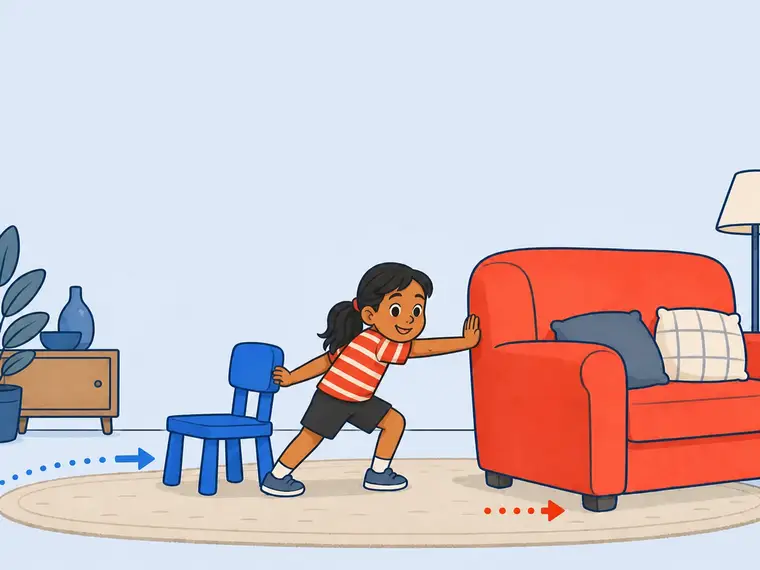
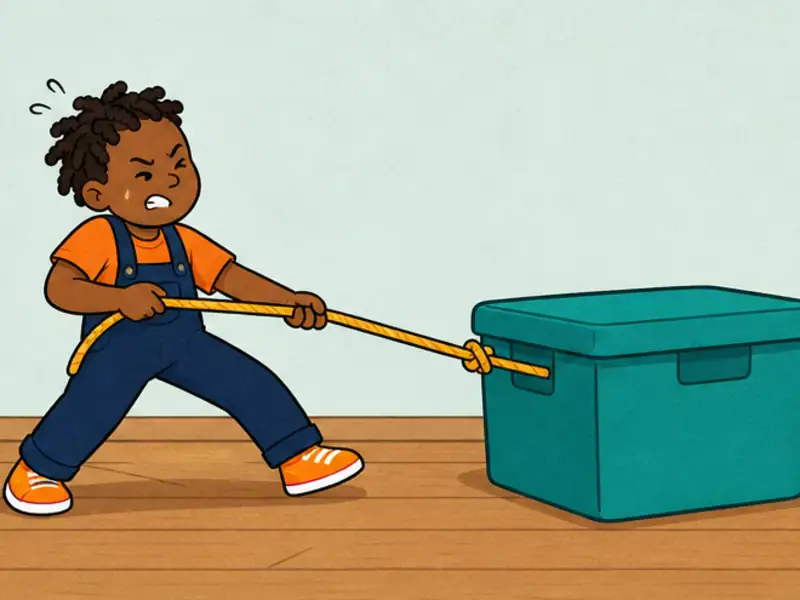
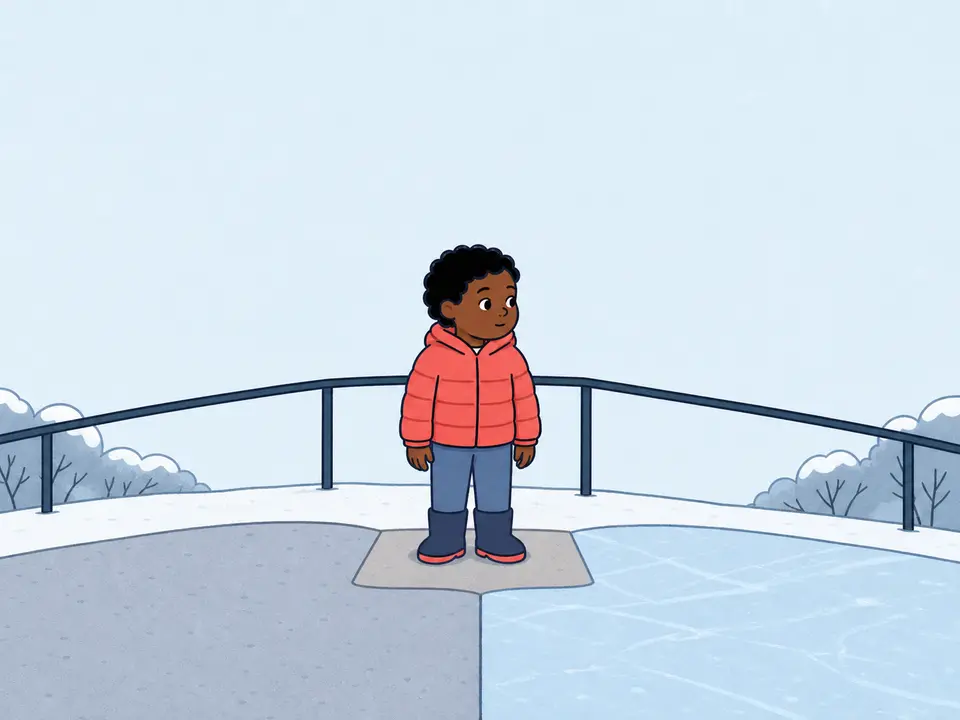
After you watchWhy does a ball on a string fly off the second you let go?
The short answer
When you cut the string on a whirling ball, it does not shoot straight outward — it flies off sideways, in a straight line along the direction it was already moving (the tangent). The string had been pulling the ball inward the whole time to bend its path into a circle, so the moment that pull is gone, the ball just keeps going straight.
Try this next
- What if you let go at a different spot in the circle — say the top instead of the side? Whirl the ball and predict which way it shoots before you cut at the top. Watch the trail: the tangent points a new direction every spot around the circle.
- What if you spin the ball faster before cutting the string? Guess first: does a faster ball still leave sideways, or does it finally fly outward? Crank up the speed, cut, and check the trail against your guess.
Now you — bend it
- What if What if you crank the whirl speed way up before you cut the string — does the ball finally fly outward instead of sideways?The release direction is the tangent no matter the speed; speed only changes how fast it leaves and how hard your hand had to pull. Predict whether the ANGLE of escape changes before you slide it to FAST.
- What if What if you used a string twice as long but spun the ball at the same speed — would your hand have to pull harder or easier to keep it circling?The inward pull needed is mv²/r, so the radius r is sitting in the denominator. Predict which way the tension goes when r doubles before you reason it out.
- What if What if you cut the string at the very top of the circle versus the side — can you aim the ball at a target on the wall by choosing WHEN to snip?The ball always leaves along the tangent, which points a different compass direction at every point of the circle. Predict the launch angle at two release points before you check the trail.
Can you prove it?There is no outward force on the ball — the only real force is the string pulling inward, and that is exactly why the ball leaves along the tangent (sideways), not radially outward. — Whirl the ball and cut the string several times at different release points, marking each launch direction. If an outward force existed, every ball would shoot straight away from the center; instead every launch line is perpendicular to the string at the instant it broke (the tangent) and points in the spin direction. One inward-pointing cause that vanishes, leaving straight-line motion, fits the evidence; an outward push does not.
Design your own test:Before you slide it from slow to FAST, predict two things: does the ball's escape DIRECTION change at all, and what happens to how hard your hand (the string) has to pull to keep it on the circle?
Explain it to a 6-year-old: The string is always tugging the ball toward your hand, so when you cut it the ball just keeps zooming the way it was already going — sideways, like a kid let go on a merry-go-round.
The whole story
How it works
A moving object keeps traveling in a straight line at a steady speed unless a force pushes or pulls it — that is inertia, Newton's first law. To make the ball go in a circle, the string constantly pulls it inward, toward your hand. That inward pull is the only real force bending the ball's straight-line motion into a curve. At every instant the ball is actually trying to head straight along the tangent. Cut the string and there is no longer anything bending its path, so it leaves on that tangent and continues in a straight line (until gravity curves it down and air slows it).
What people get wrong
Many people think a spinning thing is flung outward by an outward force, so they expect the ball to fly straight away from the center. There is no outward force on the ball. The 'centrifugal' push you feel is your body sensing the ball's resistance to being pulled inward, not a real force throwing it out. The only real force is the string pulling inward, and when it is gone the ball goes sideways, not outward.
The catch
It is true that the ball feels like it pulls outward, and your hand really does have to pull hard to hold it — that hard pull is the inward force doing its job. And the ball flies perfectly straight only for the first instant after release; in the real world gravity then bends its path downward and air resistance slows it, so it is a straight launch rather than a straight line that lasts forever.
Questions kids ask
Which way does a ball on a string actually go when the string snaps?
It flies off sideways along the tangent — the exact direction it was moving at the instant the string broke — in a straight line. It does not shoot straight outward from the center.
If nothing pushes the ball outward, why does it feel like it pulls away from my hand?
What you feel is the ball resisting being pulled inward. Your hand pulls the ball toward you to keep bending its path into a circle, and that pull is what you feel as a tug. The ball is not being pushed outward by a force; it is just trying to go straight while the string keeps redirecting it.
What is the string actually doing while the ball spins?
The string pulls the ball inward, toward the center, the entire time. That steady inward pull is what curves the ball's natural straight-line motion into a circle. Without it the ball would simply travel in a straight line.
Does the ball keep going straight forever after the string is cut?
Only for an instant. With no string, no other sideways force acts, so it leaves in a straight line. But gravity soon curves its path downward and air resistance slows it, so on Earth it traces an arc as it flies away.
Talk about it
- Before we cut the string, which way do you think the ball will go — and can you point with your hand?
- Your hand has to pull hard to keep the ball spinning. Guess what would happen to the ball if your hand suddenly stopped pulling.
- Where else have you seen something fly off a spinning thing? What did its path look like?
For grown-ups
Circular motion requires a continuous centripetal (center-pointing) force to supply the inward acceleration v²/r. Here that force is the string's tension. There is no real outward force acting on the ball; the 'centrifugal force' is a fictitious force that appears only in the rotating reference frame. When the tension is removed, Newton's first law governs: the ball departs tangentially at its instantaneous velocity, after which gravity and drag act on it.