Classroom mode
A question for the whole room
One story to open. A room full of ideas to test.
Ready in three steps
- 1Open the story.Read and try the first pages together.
- 2Pause for a prediction.At the story’s question, read its choices aloud. Invite a vote and ask, “What makes you think that?”
- 3Run it. Watch. Wonder.Choose the class’s prediction, run the experiment, and compare what happened with your guesses.
Different guesses are welcome. The experiment gives everyone something to rethink.
Something to put on paper
A one-page prediction and observation sheet. No answers included.
After the experiment: discussion notes
Talk about what happened
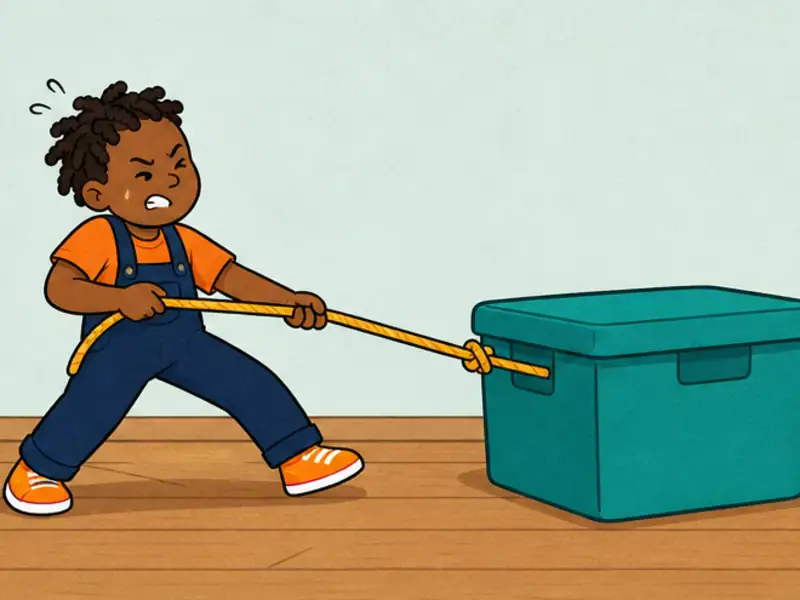
- Predict first: if friction were one fixed amount, would a box ever lurch when it breaks free? Then run the experiment and check.
- Predict whether a lighter object is also harder to start than to keep sliding, then explain why using static versus kinetic grip.
- Where does the leftover force come from that jerks the box forward the instant it breaks loose?
Where it shows up in real life
- Heaving a heavy chair or laundry basket across the floor — it sticks, pops loose, then glides
- A sled on snow: hard to start, easy to keep going
- A squeaky door hinge or a violin string, which grip and slip over and over
Free · no login · no student accounts
Clickory · wonder sheet
Date __________________
Is it harder to START a box sliding or to KEEP it sliding?
Before we try it: what is your prediction?
What do you think will happen? What makes you think that?
What did you notice?
Draw or describe what happened.
What would you try next?
What could you change? Make a new prediction.