How does the AC make cold air?
Did this make sense?
Your thumbs help us make it clearer.
Thanks! That helps us make it clearer.
See it another way
How does an air conditioner actually work? - Anna Rothschild
Follow refrigerant through the indoor coil, compressor, outdoor coil, and expansion valve as it carries heat away.
Requires internet. You’re leaving Clickory in a new tab; YouTube may show ads or recommendations.
Keep going
What else makes you wonder?
Is the fridge a tiny air conditioner?
It's the same squeeze-loop, shrunk to a box. If that's true, where does all the heat it removes go — and why is the air behind the fridge warm?
How does sweating cool you down with no machine at all?
Your body has no pipes or gas, yet it still moves heat off your skin. What could the drops of water be doing as they dry that carries the warmth away?
Can it ever get TOO cold outside for a heat pump?
The colder the air, the less heat there is to scoop, so the stealing gets harder. What might a house do on the very coldest nights when there's barely any heat left to grab?
More to explore
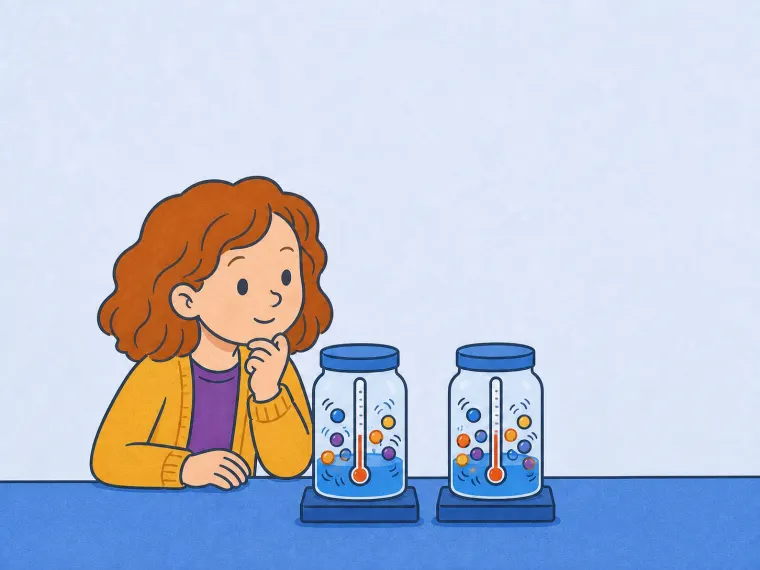
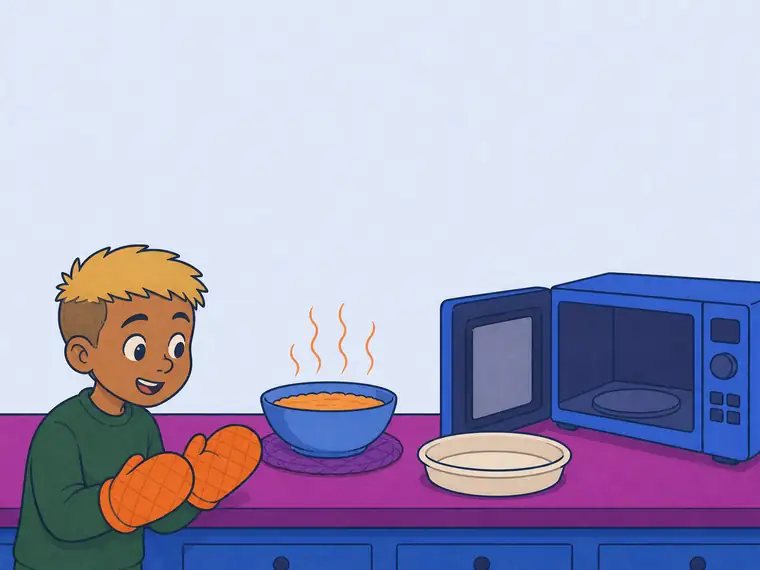
After you watchHow does the AC make cold air?
The short answer
An air conditioner doesn't make cold at all — it MOVES heat. Squeezing its looping gas makes the gas hot; letting it expand makes it cold. So a cold pipe indoors soaks up your room's heat, the gas carries it outside, and a hot pipe dumps it into the yard. The room cools only because its heat left.
Try this next
- What if you set the squeeze slider all the way to one end? Predict first, then drag the squeeze toy fully to SQUEEZE and watch the gas glow hot, then fully to EXPAND and watch it turn icy — the same gas, two opposite temperatures.
- What if the loop ran faster? Predict whether speeding up the heat taxi moves more heat, then push the loop-speed slider up and watch how quickly the amber dots ferry heat from the cold indoor coil out to the hot outdoor one.
The whole story
How it works
Cold isn't a substance you can pour in; it's just what's left when heat is carried away. Heat is the jiggle of molecules, and it always flows from warmer to cooler. An air conditioner uses one clever trick to steer that flow: squeeze a gas and it jiggles harder and gets hot; let it expand and it calms and gets cold. The machine runs this gas around a loop. On the indoor side the gas is expanded into an icy pipe that is colder than the room, so room heat hops onto it. The gas is then squeezed into a hot pipe outdoors that is hotter than the yard, so the heat hops off there. Round and round, the loop ferries heat from inside to outside — which is why the box outdoors blows warm air. Flip the loop's direction and the very same machine pulls heat from outside and drops it indoors: that's a heat pump.
What people get wrong
It's tempting to think the AC 'makes cold' and blows it into the room, or that cold flows in the way heat flows out. But cold isn't a thing that can be made or moved — only heat is. The machine never creates coldness; it removes heat and carries it somewhere else. That's why the outdoor unit must blow HOT: the warmth pouring off it is exactly the heat that used to be in your room. And it's why the same hardware, run backwards, can heat a house.
The catch
Moving heat isn't free. Pushing heat from a cool place to a warmer place is uphill, so the machine has to spend energy (electricity) to do it — that's why an AC has a power cord and a humming compressor. But moving heat is far cheaper than making it: a heat pump can deliver more warmth than the energy it burns, because most of that warmth was already outside, free for the taking. A furnace, by contrast, makes heat from scratch and can never beat one-for-one. Even so, when it gets extremely cold outside there is less heat to scoop, so the stealing gets harder and some homes keep a furnace as backup.
Questions kids ask
If the AC cools my room, why is the box outside blowing hot air?
Because that hot air is your room's heat, leaving. The machine can't destroy heat, only carry it somewhere else. It picks heat up on a cold pipe indoors and dumps it out of a hot pipe outdoors, so the outdoor box always blows warm while the inside cools.
How can a heat pump warm a house from freezing air — isn't cold air empty of heat?
Freezing air still holds lots of heat jiggle; 0° is nowhere near truly empty. The flipped loop makes its outdoor pipe even colder than that cold air — around −15° — so heat still flows from the air onto the pipe. The gas then squeezes hot and drops that heat inside.
Why does an air conditioner drip water?
The icy indoor pipe is so cold that the air's invisible water vapor huddles up into liquid dew on it — exactly the way a cold soda can gets wet. That dew collects and drips away down a little drain tube, which is the puddle you sometimes see under a parked car in summer.
Is my refrigerator the same kind of machine?
Yes — a fridge is this exact squeeze-loop shrunk into a box. It moves heat out of the food compartment and dumps it into your kitchen. Feel the warm air behind or beneath the fridge: that's your leftovers' heat being carried out, just like the AC's outdoor box.
Talk about it
- We never 'add cold' to a room — we remove heat. Where do you think all that removed heat actually goes?
- Why does the box outside have to blow HOT for the inside to get cool?
- A heat pump is just an AC running backwards — why is moving heat around cheaper than making it from scratch?
For grown-ups
This is the vapor-compression refrigeration cycle. A refrigerant is compressed, raising its pressure and temperature above the outdoor air so it rejects heat at the condenser; it then passes through an expansion valve, dropping its pressure and temperature below the indoor air so it absorbs heat at the evaporator. No cold is generated — heat is pumped from a cold reservoir to a hot one, which requires work input (the second law of thermodynamics forbids doing it for free). Reverse the flow with a reversing valve and the same components form a heat pump. Because it moves heat rather than creating it, a heat pump's coefficient of performance can exceed 1 (often 3–4), delivering several units of heat per unit of electricity, since most of the delivered heat is drawn from the outside air — which retains substantial thermal energy even well below 0°C.